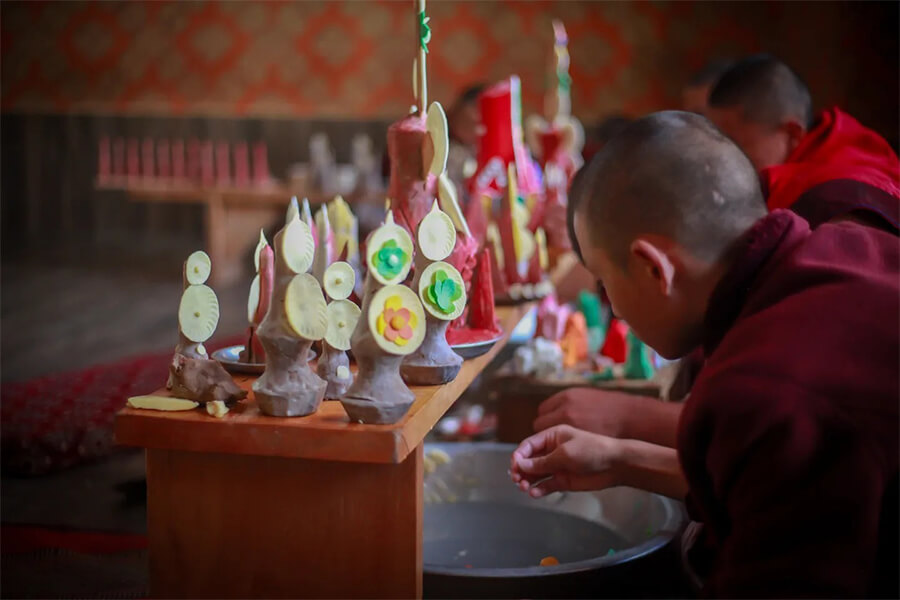
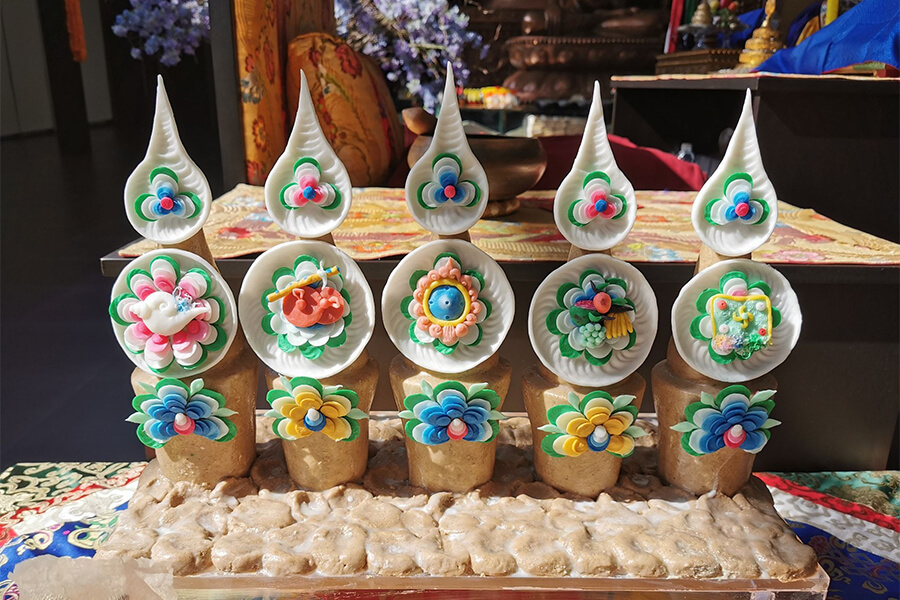
In the mystical kingdom of Bhutan, where ancient traditions blend seamlessly with breathtaking landscapes, Torma stands as a profound symbol of spiritual devotion. As travelers embark on Bhutan tours, they often encounter these intricately crafted offerings in monasteries and during festivals, providing a glimpse into the heart of Bhutanese Buddhism. This Buddhist ritual cake is not merely a confection but a vital element in religious ceremonies, embodying purity, protection, and enlightenment. Drawing from my years of exploring Bhutan's hidden valleys and participating in local rituals, I can attest to the mesmerizing role that Torma plays in fostering a deeper connection to the divine.
What Is A Torma?
Torma is a sculptural offering made primarily from flour and butter, shaped into various forms and used in Tibetan Buddhist practices, including those in Bhutan. This ritual cake serves as a conduit between the physical and spiritual realms, often placed on altars during prayers and ceremonies. Unlike ordinary cakes, Torma is not intended for consumption by humans in most cases; instead, it represents offerings to deities, protectors, and enlightened beings.
From my experiences visiting remote dzongs like Punakha and Trongsa, I've seen how Torma enhances the atmosphere of sanctity. These creations can range from simple cones to elaborate figures adorned with colorful dyes and symbolic motifs. The essence of Torma lies in its impermanence, mirroring the Buddhist teaching of transience—once the ritual concludes, it may be discarded or distributed to animals, emphasizing detachment from material forms.
In Bhutanese culture, Torma is integral to Vajrayana Buddhism, where visualization and offerings are key to tantric practices. It acts as a focal point for meditation, helping practitioners invoke blessings and ward off negative energies. For those on Bhutan tours, witnessing a Torma during a tshechu festival offers an authentic insight into how this Buddhist ritual cake bridges everyday life with profound spiritual pursuits.
The symbolic layers of Bhutanese ritual cake are rich: its base often represents the earth, while ascending shapes symbolize mountains or stupas. Colors like red for power or white for purity add further depth. As an expert in Bhutanese traditions, I recommend observing these during quiet monastery visits to appreciate their craftsmanship without the crowds.
The Origin And History Of Torma
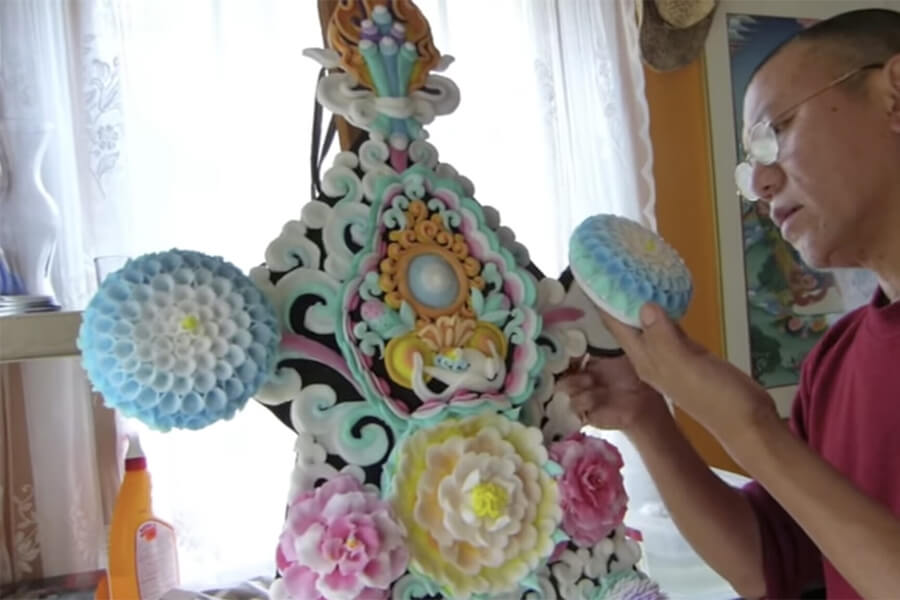
The roots of Torma trace back to ancient India, evolving through Tibetan Buddhism before flourishing in Bhutan. Historical texts suggest that Torma originated from pre-Buddhist Bon traditions, where similar offerings were made to appease local spirits. When Buddhism arrived in Tibet around the 7th century, these practices were adapted, incorporating tantric elements from Indian masters like Padmasambhava.
In Bhutan, Torma gained prominence during the 17th century under Zhabdrung Ngawang Namgyal, the unifier of the kingdom. He formalized many rituals, including the use of this ritual cake in Bhutan, to strengthen spiritual defenses against invasions. From my fieldwork in historical sites like Paro Taktsang, I've noted how this ritual cake reflects this era's emphasis on protective deities.
Over centuries, Torma has adapted to local contexts. In Bhutan, influences from Drukpa Kagyu lineage shaped its designs, making it distinct from Tibetan variants. Ancient manuscripts in the National Library of Bhutan describe ritual cake as essential for chöd practices, where offerings cut through ego attachments.
During the Bhutanese New Year, Losar, Torma features prominently, symbolizing renewal. Historians like Karma Phuntsho have documented how this Buddhist ritual cake survived cultural shifts, remaining a cornerstone of monastic life. My interactions with lamas reveal that Torma's history underscores Bhutan's commitment to preserving Vajrayana heritage amid modernization.
Types Of Torma Used In Buddhist Rituals
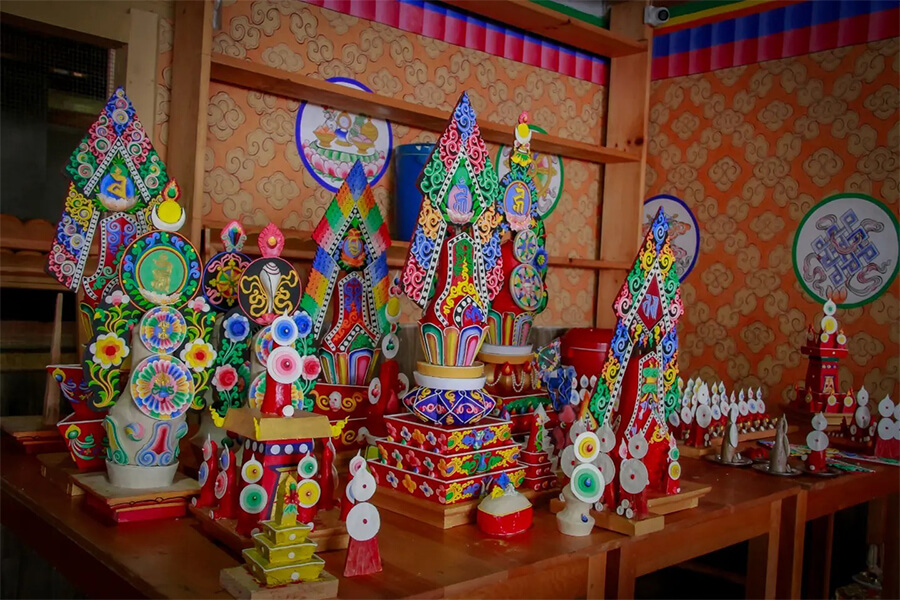
Bhutanese rituals employ various Torma types, each tailored to specific purposes. These classifications highlight the versatility of this ritual cake, ensuring rituals address diverse spiritual needs. Understanding these variations enriches one's appreciation during monastery visits.
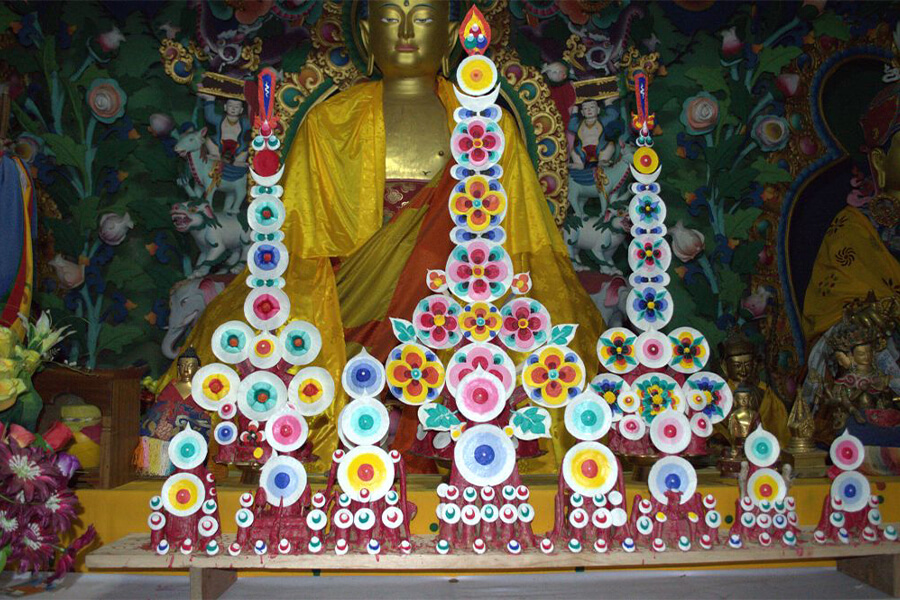
Deity Torma
Deity Torma is crafted to invoke specific enlightened beings, such as Tara or Chenrezig. Shaped like lotuses or thrones, these Torma are adorned with symbolic jewels and mantras. In practices like guru yoga, they serve as the deity's temporary abode.
From my observations in Thimphu chortens, Deity Torma facilitates visualization meditations, where practitioners offer it mentally to accumulate merit. This type emphasizes beauty and precision, often using vibrant pigments derived from natural minerals.
Food Torma
Food Torma represents sustenance offerings to hungry ghosts or lower realms beings. Made with edible ingredients like barley flour, it's designed to alleviate suffering through compassionate giving. In Bhutan, during segaki ceremonies, this ritual cake is distributed outdoors.
I've participated in such rituals where Food Torma is crumbled and scattered, teaching impermanence. Its simple, rounded forms contrast with more elaborate types, focusing on functionality over aesthetics.
Medicinal Torma
Medicinal Torma incorporates herbs and blessed substances to heal ailments or purify environments. In Bhutanese medicine, influenced by Tibetan systems, this Buddhist ritual cake is used in rituals for health restoration.
Lamas prepare it with ingredients like turmeric or sandalwood, believing it absorbs negativities. During epidemics, as recounted in historical annals, Medicinal Torma played roles in community protections, blending spirituality with traditional healing.
Captured Torma
Captured Torma is employed in wrathful rituals to subdue negative forces or obstacles. Shaped aggressively with spikes or fierce motifs, it "captures" harmful energies for transformation.
In tantric empowerments I've witnessed, this ritual cake in Bhutan symbolizes victory over inner demons. Its dark colors and intricate designs require skilled artisans, often monks trained in ritual arts.
Offering Torma
Offering Torma is the most general type, presented to all beings during daily pujas. It can be small and numerous, representing the eight sensory offerings like flowers and incense.
In festival settings, rows of Offering Torma create stunning displays. This type fosters generosity, a core Buddhist virtue, and is accessible for laypeople to prepare at home.
How To Make Torma
Creating Torma is an art form requiring patience and devotion. In Bhutan, monks and artisans pass down techniques through apprenticeships. Here's a guide based on traditional methods.
Materials And Ingredients Used To Make Torma
Essential materials for Torma include tsampa (roasted barley flour) as the base, providing structure and cultural authenticity. Butter or ghee binds the mixture, symbolizing richness and purity.
Natural dyes from plants like indigo for blue or saffron for yellow add symbolic colors. Additional elements might include honey for sweetness in certain types, or herbs for Medicinal Torma. Tools like molds, knives, and brushes are crucial for shaping.
From sourcing ingredients in local markets during my travels, I know quality matters—organic barley ensures the Buddhist ritual cake's sanctity. Avoid modern additives to maintain tradition.
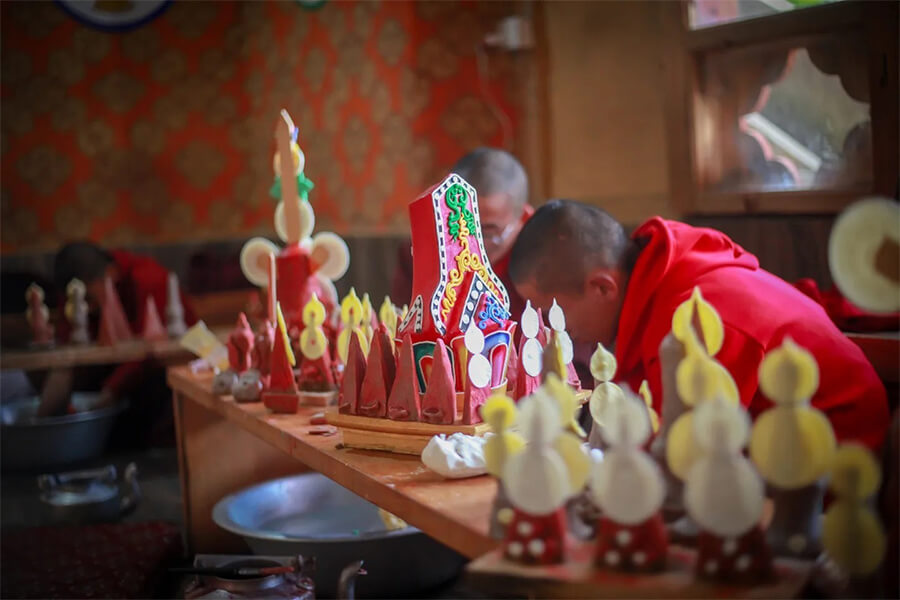
Traditional Process To Make Buddhist Ritual Cake
Begin by purifying the workspace with incense and prayers, setting a meditative intent. Mix tsampa with warm butter in a bowl, kneading until dough-like consistency is achieved—about 20 minutes for smoothness.
Shape the base form, such as a cone for basic Bhutan ritual cake, using hands or molds. Add layers for complexity, like petals for Deity types. Decorate with colored dough, embedding symbols like flames or eyes.
Allow it to set in a cool place, then bless it through mantras. The entire process can take hours, demanding focus. In workshops I've attended, lamas emphasize that the maker's mindset infuses the ritual cake with power.
For home practice, start small: a simple Offering Torma using household flour. Remember, imperfections are acceptable if devotion is sincere.
Torma embodies Bhutan's spiritual essence, inviting deeper exploration. Whether in rituals or as cultural artifacts, this ritual cake in Bhutan continues to inspire.