
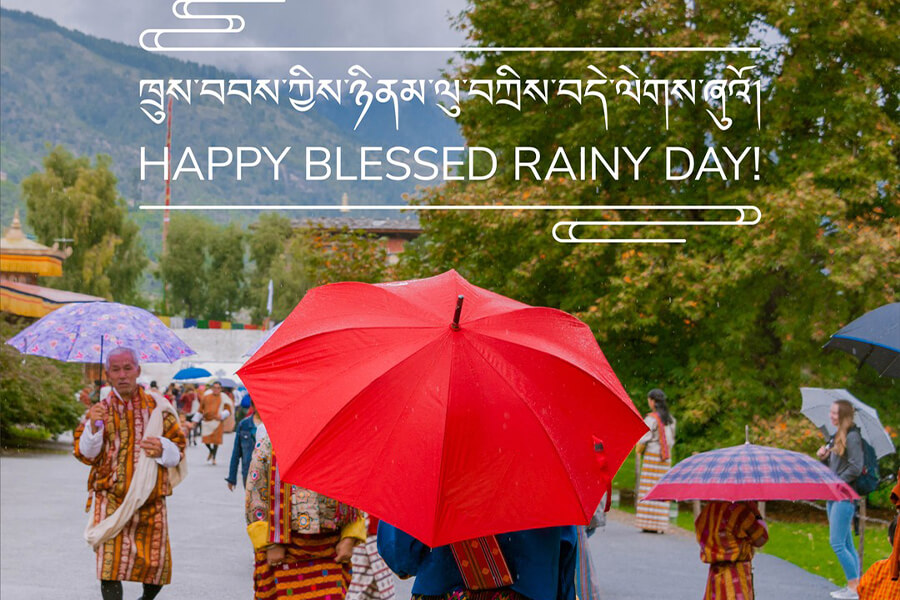
As a travel writer who has spent many seasons exploring the valleys and high passes of the Himalayas, I can confidently say that few cultural experiences in Asia feel as genuine and unpretentious as Blessed Rainy Day. In Bhutan - the small kingdom famous for measuring progress through Gross National Happiness - this particular festival stands out for its simplicity, its deep spiritual meaning, and its joyful communal spirit. For travelers searching for Bhutan tour packages that go beyond the usual dzong tours and tiger’s nest hikes, participating in or simply witnessing Blessed Rainy Day often becomes one of the most memorable parts of the journey.
Blessed Rainy Day is not loud or theatrical. There are no elaborate masked dances, no long processions of monks, no fireworks. Instead, the entire country pauses so that people of all ages can step into rivers, streams, ponds and even under open rain showers to bathe together - an act that is at once practical, symbolic and deeply unifying.
What Is Blessed Rainy Day?
Blessed Rainy Day marks the symbolic end of the long monsoon season and the beginning of the clearer, drier autumn weather that Bhutanese farmers depend on for harvest. On this single day, the rainwater - and all natural water sources - is considered to carry special purifying power. According to traditional belief, the heavens themselves bless the water that falls or flows on that precise date.
The festival is observed across the entire country, from the subtropical southern foothills to the high alpine valleys near the Tibetan border. In cities like Thimphu and Paro, people gather at designated riverbanks or public bathing spots. In remote villages, families walk together to the nearest clean stream or waterfall.
What makes Blessed Rainy Day special is how ordinary it feels while being profoundly meaningful. There is no dress code, no expensive offering required, no performance to watch. The main “event” is simply people getting wet - children laughing and splashing, teenagers taking selfies, grandparents sitting calmly on rocks while younger family members pour water over their heads.
Having joined locals in several locations over the years, I can say that the atmosphere is overwhelmingly light-hearted. People talk, joke, share soap and shampoo, help each other scrub their backs. It feels like a giant national family reunion held in cold mountain water.
Thruebab - The Traditional Name of Blessed Rainy Day
The Bhutanese name for the festival is Thruebab (sometimes written Thrue Bab or Khrus-bab depending on transliteration).
The word thrue refers to ritual bathing or ablution, while bab means “descent” or “falling down”. Put together, Thruebab literally means “the descent of the blessed bath” — a poetic way of describing the moment when ordinary water is believed to become sacred cleansing water through divine blessing.
Thruebab is the name most Bhutanese use in daily conversation and in Dzongkha-language media. When speaking with international visitors, guides, hotel staff and official tourism materials often switch to Blessed Rainy Day because it is easier to understand and remember.
In monasteries and among older generations, you will still hear long explanations about why Thruebab is astrologically determined each year. The date is not fixed on the Gregorian calendar; it is calculated according to the Bhutanese lunar-solar calendar by senior astrologers (tsipas) working at the central monk body.
This careful calculation is one reason Thruebab feels so authentic - it is not a date chosen for tourism convenience, but one rooted in centuries-old astronomical observation.
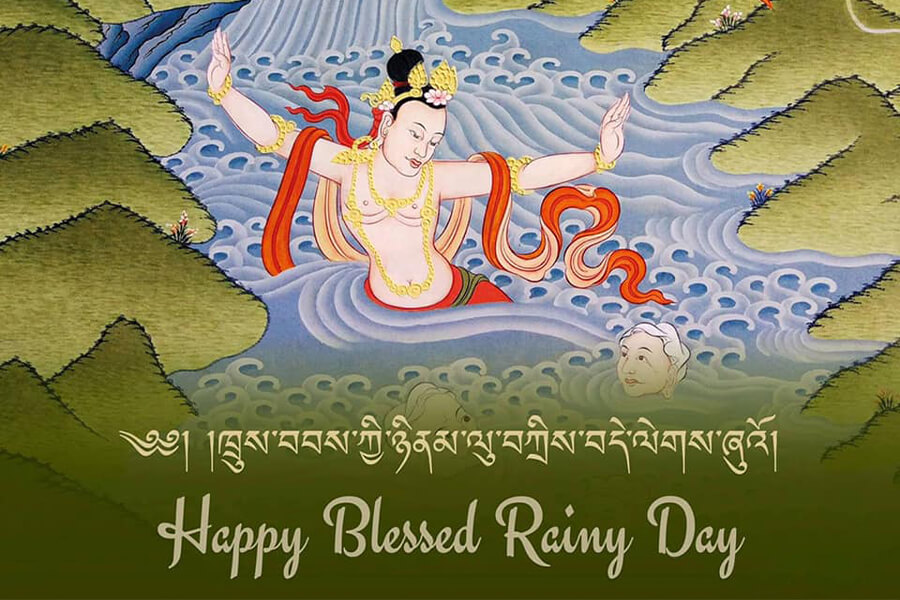
The Meaning and Spiritual Significance of Blessed Rainy Day in Bhutan
At its core, Blessed Rainy Day in Bhutan is a purification festival. Bhutanese Vajrayana Buddhism teaches that negative karma, harmful thoughts, illness-causing spirits and accumulated impurities can be washed away through the right ritual at the right moment.
On Blessed Rainy Day, the water that touches the body is believed to carry the blessings of all the enlightened beings, the protective deities of the land, and the nagas (water spirits) that dwell in rivers and lakes. This makes the bath far more powerful than ordinary washing. Many people also believe that the merit created on this day is multiplied many times over. That is why even busy urban families make time to travel back to their villages or at least find a clean river near their town.
The festival also carries a strong message of impermanence and renewal. The monsoon has just finished - the earth has been soaked, the fields have drunk deeply, the rivers are full. Now the skies clear, the harvest begins, and life moves into a new phase. Bathing together becomes a physical expression of letting go of the old year and welcoming the new cycle. In conversations with monks in Punakha and Trongsa, I have often heard the same explanation: “On this day the water becomes like medicine. If you bathe with a good motivation, it cleans not only the body but also the mind.” This combination of practical action and profound intention is what gives Blessed Rainy Day in Bhutan its lasting spiritual weight.
Why Bhutanese Bathe Outdoors on Blessed Rainy Day
The choice to bathe outdoors rather than at home is deliberate and symbolic.
First, the blessing is believed to be strongest in naturally flowing water - rivers, streams, waterfalls, springs - because these sources are directly connected to the landscape deities and to the rain that fell from the sky that day.
Second, bathing together in public reinforces the idea of equality. In Bhutanese culture there is a strong value placed on community harmony. When a minister, a farmer, a shopkeeper and a monk all stand in the same cold river scrubbing themselves, social hierarchy momentarily dissolves.
Third, there is a practical side. Most Bhutanese homes, especially in rural areas, do not have hot showers or large private bathrooms. Going to the river with a bar of soap, a bucket and a change of clothes has been the normal way to bathe for generations.
Even in modern apartments in Thimphu, many families still prefer to join the communal bath rather than stay indoors. It is simply part of being Bhutanese on that day.
From a visitor’s perspective, watching or joining this open-air bathing can feel surprising at first. Yet after a few minutes you realise there is nothing voyeuristic or awkward about it — people are simply doing what their parents, grandparents and ancestors did.
When Is Blessed Rainy Day Celebrated in Bhutan?
Blessed Rainy Day Bhutan usually falls in the second half of September or the very beginning of October.
Because the date is fixed according to the Bhutanese lunar calendar, it shifts slightly each year. Most often it lands between 20 September and 5 October on the international calendar.
The exact day is officially announced by the Central Monastic Body several months in advance. Travel agencies and hotels usually know the date by early summer.
For travelers planning a trip, it is worth checking the date when booking. Many bhutan tour packages now offer special itineraries that allow guests to spend Blessed Rainy Day in a village homestay or near a popular river spot so they can experience the festival naturally.
How Locals Celebrate Blessed Rainy Day
A typical Blessed Rainy Day begins early.
Many families light butter lamps and incense at the home altar before sunrise and recite prayers. Some people visit a nearby lhakhang (temple) to receive a blessing from a lama. Around 7–8 a.m., groups start walking toward rivers and streams. In towns you see whole families carrying plastic buckets, towels, soap, and clean clothes. In villages the walk may be only five or ten minutes.
Once at the water, the bathing begins. There is no strict ritual order - some people simply jump in, others pour water slowly over their heads while chanting mantras. Children usually turn it into a game within minutes. After bathing, people dry off, change into clean clothes and often share a picnic. Red rice, ema datshi (chilli-cheese stew), dried beef, fresh vegetables and sometimes ara (local alcoholic beverage made from rice or maize) appear from bamboo baskets.
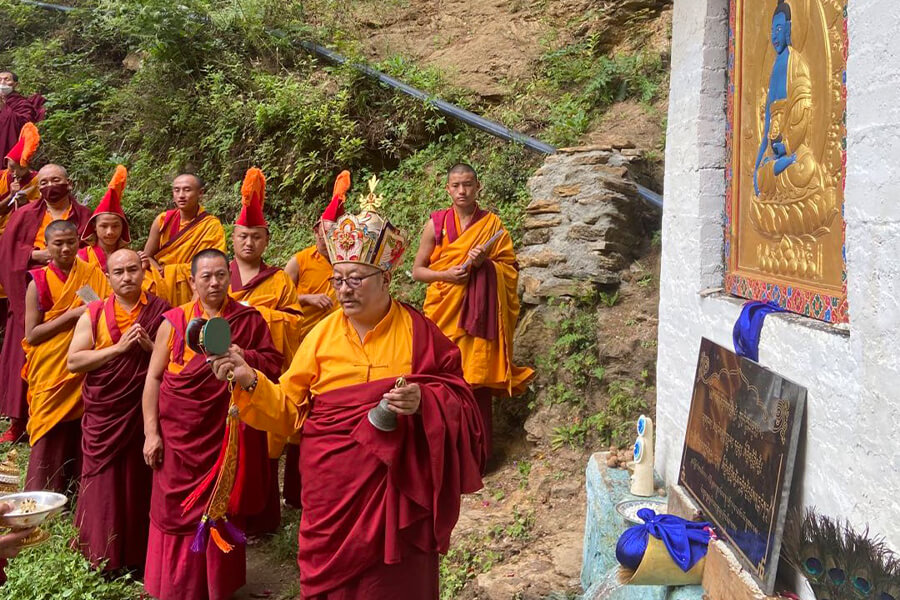
In the afternoon many families return home to rest or continue celebrating quietly. In some places archery matches, khuru (dart-throwing), or informal singing and dancing happen in the evening. In monasteries, monks perform special purification pujas and offer tsok (feast offerings) to the deities. The sound of drums and horns drifts through the valleys.
Frequently Asked Questions About Blessed Rainy Day
Is Blessed Rainy Day a public holiday in Bhutan?
Yes. Blessed Rainy Day is one of the eleven national public holidays recognised by the Royal Government of Bhutan. Government offices, banks, schools and most private businesses close for the day so that everyone can participate.
Do people really bathe outdoors on this day?
Yes - the large majority of Bhutanese do. In cities some people collect rainwater at home or bathe in public fountains, but the tradition of going to a natural water source remains very strong, especially outside Thimphu.
Is Blessed Rainy Day connected to Buddhism?
Yes, very closely. The festival is built around Vajrayana Buddhist concepts of purification, blessing, karma cleansing and interdependence with nature spirits. At the same time it incorporates older, pre-Buddhist beliefs about sacred waters and seasonal cycles.
Can Visitors Participate in Blessed Rainy Day?
Yes, visitors are generally welcome to join - especially if they are staying with a Bhutanese family or in a village homestay. The key is to behave respectfully: wear modest clothing (long shorts or a sarong for women, shorts and t-shirt for men), ask permission before taking photos, and follow the lead of the locals around you.
Many guides and homestay hosts are happy to bring guests to a suitable bathing spot and explain what to do. Participating is one of the most authentic ways to connect with Bhutanese culture.
Practical Tips for Travelers Who Want to Experience Blessed Rainy Day
If you decide to include Blessed Rainy Day in your itinerary, here are some practical suggestions based on years of guiding friends and clients through the experience.
Choose your location carefully. Popular spots near Paro, Punakha and Thimphu can become crowded with both locals and tourists. If you prefer a quieter experience, ask your guide to take you to a smaller village stream in the Haa valley, Wangdue Phodrang, or even Trongsa.
Bring the right gear. Pack one set of quick-dry clothes to wear while bathing, a sarong or large towel for modesty, flip-flops or water shoes (rocks can be slippery), a small dry bag for your phone and valuables, and a change of warm dry clothes for afterwards — mountain rivers are cold even in September.
Respect privacy. Bhutanese people are generally open about the festival, but that does not mean everyone wants to be photographed. Always ask before pointing a camera at someone, especially children or elders.
Understand the cold. Himalayan streams are snow-fed and very chilly. Most locals do not stay in the water more than 10–15 minutes. Do not force yourself to stay longer just to prove something - hypothermia is not romantic.
Bring a small gift if invited to a family celebration. Fresh fruit, biscuits, or a small packet of tea is appreciated and helps build goodwill.
Be flexible with timing. Some families bathe at dawn, others at mid-morning. Your guide will know the habits of the community you are visiting.
How Blessed Rainy Day Reflects Modern Bhutan
Even as Bhutan modernises - with new roads, better mobile coverage, shopping malls in Thimphu, and young people studying abroad - Thruebab has not faded. If anything, it has remained remarkably stable.
Young Bhutanese who work in IT companies or tourism still make time to go home or join friends at the river. Social media is full of photos and short videos every year, usually with captions like “Thruebab vibes” or “Blessed Rainy Day loading…”.
At the same time, the festival has quietly adapted. Some urban families now collect rainwater on rooftops and perform a symbolic bath at home if they cannot travel. Others organise small group outings to cleaner parts of the Wang Chhu or Pa Chhu rivers to avoid polluted sections near towns.
These small changes show that Blessed Rainy Day is a living tradition — rooted in the past, yet flexible enough to survive in the present.