
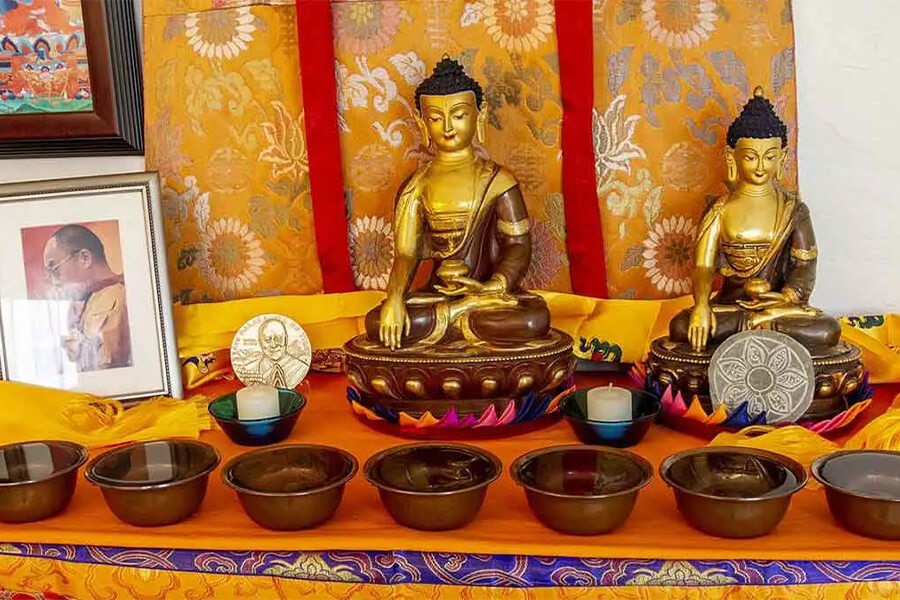
In the mystical kingdom of Bhutan, where ancient traditions intertwine with breathtaking landscapes, the practice of offering water in seven Buddhist offering bowls holds profound spiritual significance. For those embarking on bhutan trips, witnessing or participating in this ritual offers a glimpse into the heart of Bhutanese devotion. Rooted in Vajrayana Buddhism, which permeates every aspect of life here, these offerings symbolize purity, generosity, and the path to enlightenment. As an experienced travel writer who has journeyed through Bhutan's sacred valleys and monasteries, I've seen how this simple act fosters mindfulness and connects practitioners to their cultural heritage.
What Are the Seven Buddhist Offering Bowls?
The Seven Buddhist offering bowls are small vessels, often made from metal like copper or silver, used in Bhutanese Buddhist rituals to present offerings to the enlightened beings. In Bhutan, these bowls are a staple in home altars and temple shrines, embodying the essence of devotion. Each bowl is filled with water, representing various sensory offerings that please the senses and accumulate merit.
From my visits to places like Punakha Dzong, I've observed how families meticulously maintain these buddhist water offering bowls. They are not mere decorations but tools for daily spiritual practice. The tradition traces back to ancient Indian hospitality customs, adapted into Himalayan Buddhism around the 8th century and popularized in the 11th century by the master Atisa.
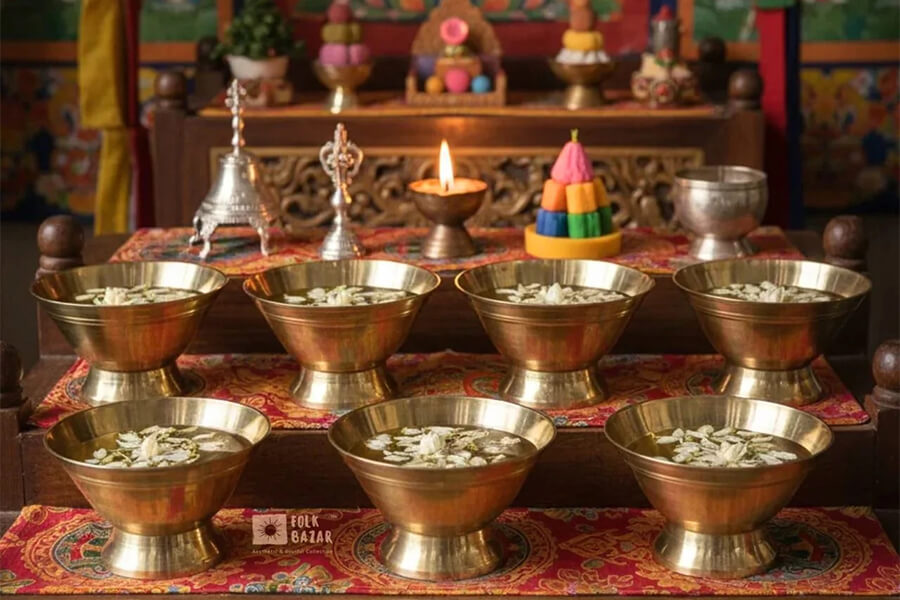
Typically arranged in a straight line on the altar, the Seven Buddhist offering bowls serve as a reminder of impermanence and detachment. Water, being abundant and pure, is the medium, allowing practitioners to offer without clinging. This practice is accessible to all, from monks in remote monasteries to villagers in Thimphu, making it a cornerstone of Bhutanese spiritual life.
In essence, the Seven Buddhist offering bowls facilitate a connection between the mundane and the divine, helping individuals cultivate virtues like generosity and compassion. During festivals such as Tshechu, these offerings amplify the communal energy, drawing participants into a shared meditative experience.
Yonchap - The Water Offering Tradition in Bhutan
Yonchap, the Bhutanese term for the water offering ritual, is an integral part of daily life in this Himalayan nation. Pronounced as "yon-chap," it involves filling the Seven Buddhist offering bowls with fresh water each morning, symbolizing renewal and purity. In Bhutan, where Buddhism is the state religion, Yonchap is performed in nearly every household, from humble farmsteads in Paro to elaborate temples in Bumthang.
Drawing from my experiences guiding travelers through Bhutan, I've participated in Yonchap ceremonies at dawn, where the act feels like a gentle awakening of the spirit. The tradition emphasizes mindfulness; as one pours water, they visualize offering to all Buddhas and bodhisattvas, generating positive karma.
Historically, Yonchap evolved from Tibetan influences but has been uniquely adapted in Bhutan under the guidance of figures like Guru Rinpoche, who introduced Vajrayana here in the 8th century. In monasteries like Taktsang (Tiger's Nest), monks perform Yonchap with chants, enhancing its meditative depth.
Practically, Yonchap teaches detachment. Water is chosen because it's free and evokes no greed, aligning with Buddhist teachings on non-attachment. For visitors on bhutan trips, learning Yonchap provides cultural immersion, often arranged through local homestays or guided tours.
The ritual's simplicity belies its power; it purifies the mind, wards off negative energies, and invites blessings. In Bhutan's Gross National Happiness philosophy, Yonchap contributes to spiritual well-being, making it more than a ritual—it's a way of harmonizing with the universe.
The Significance of Each Bowl
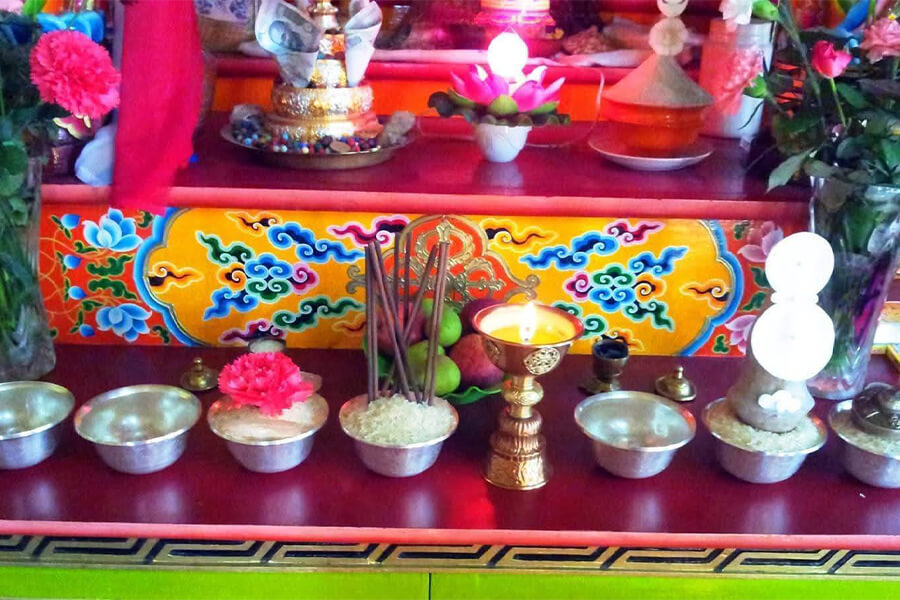
Each of the Seven Buddhist offering bowls carries specific symbolic meaning, representing essential offerings in Bhutanese Buddhism. The first bowl holds water for drinking, signifying refreshment and sustenance for the enlightened ones. This reflects the basic human need for nourishment, offered selflessly.
The second bowl is for washing, often interpreted as water for cleansing feet or face, symbolizing purification and respect, much like welcoming a honored guest in ancient traditions.
Moving to the third, it represents flowers, evoking beauty and the impermanence of life. In Bhutan, where wildflowers bloom vibrantly, this bowl reminds practitioners of nature's transient glory.
The fourth bowl stands for incense, whose aroma pleases the sense of smell and clears the air of negativity. During my stays in Bhutanese monasteries, the scent of incense during offerings created a serene atmosphere.
The fifth is light, typically a candle or butter lamp, illuminating wisdom and dispelling ignorance. In dark temple halls, this offering mirrors the enlightenment path.
The sixth bowl signifies perfume or scented water, appealing to the olfactory senses and representing purity of body and mind.
Finally, the seventh is food, often visualized as nectar, providing satisfaction and abundance.
Together, these Seven Bowls of water offering embody the seven limbs of enlightenment: prostration, offering, confession, rejoicing, requesting teachings, beseeching to remain, and dedication. This structure accumulates merit and purifies karma, as taught in Bhutanese dharma centers.
Why Water Is Used in Buddhist Offering Bowls
Water's role in buddhist water offering bowls stems from its inherent qualities: purity, abundance, and neutrality. In Bhutanese Buddhism, water symbolizes the essence of life without attachment, making it ideal for offerings. Unlike precious items that might foster greed, water is given freely, aligning with the precept of generosity.
From a practical standpoint, water is readily available in Bhutan's rivers and streams, fed by Himalayan glaciers. This accessibility ensures the ritual's universality, as seen in remote villages where elaborate offerings might be impractical.
Symbolically, water cleanses and renews, mirroring the mind's potential for purification. As I learned from lamas in Bhutan, pouring water into the Seven Buddhist offering bowls visualizes washing away defilements, fostering bodhicitta—the enlightened mind.
Water also represents the four elements, with its fluidity teaching impermanence. In Vajrayana practices, it's transformed through visualization into nectar, amplifying its spiritual potency. Moreover, using water avoids waste; at day's end, it's poured out mindfully, often onto plants, extending blessings. This eco-conscious aspect resonates with Bhutan's environmental ethos. In essence, water in Seven Bowls of water offering cultivates detachment and merit, making the practice sustainable and profound for daily devotion.
How to Arrange the Seven Buddhist Offering Bowls
Arranging the Seven Buddhist offering bowls requires mindfulness and precision, starting with a clean altar facing east if possible. Begin by wiping each bowl with a soft cloth, imagining cleansing sentient beings' minds.
Place the bowls in a straight line from left to right, about a rice grain's width apart—close but not touching, symbolizing harmony without clinging.
Fill them sequentially: start with the leftmost bowl, pouring water nearly to the brim but leaving a small space to avoid overflow, which represents greed.
Use fresh, clean water, ideally from a natural source, and chant mantras like "Om Ah Hum" while pouring to bless the offering.
From my observations in Bhutanese homes, the process takes mere minutes but sets a meditative tone for the day. Empty the bowls at sunset, pouring water away from paths to prevent stepping on it, which could negate merit.
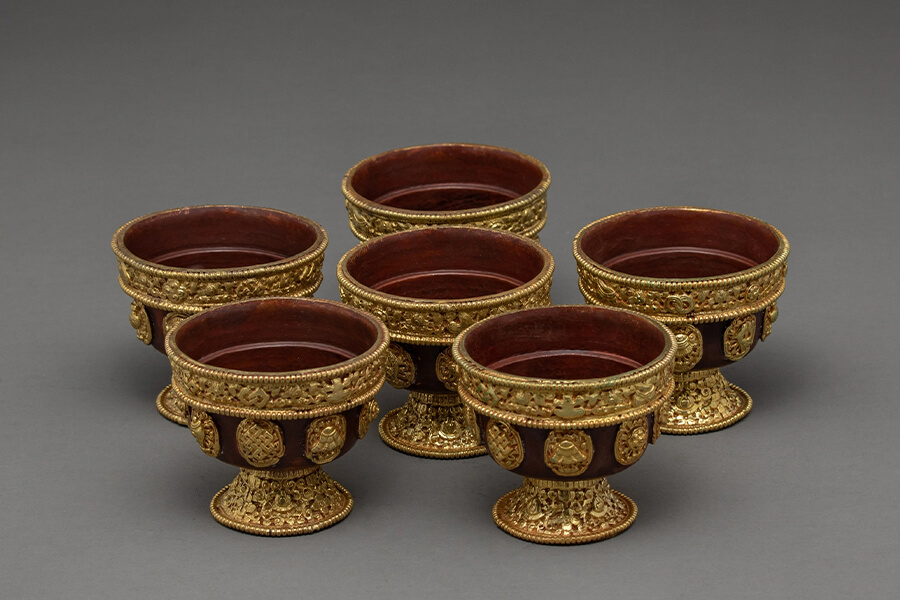
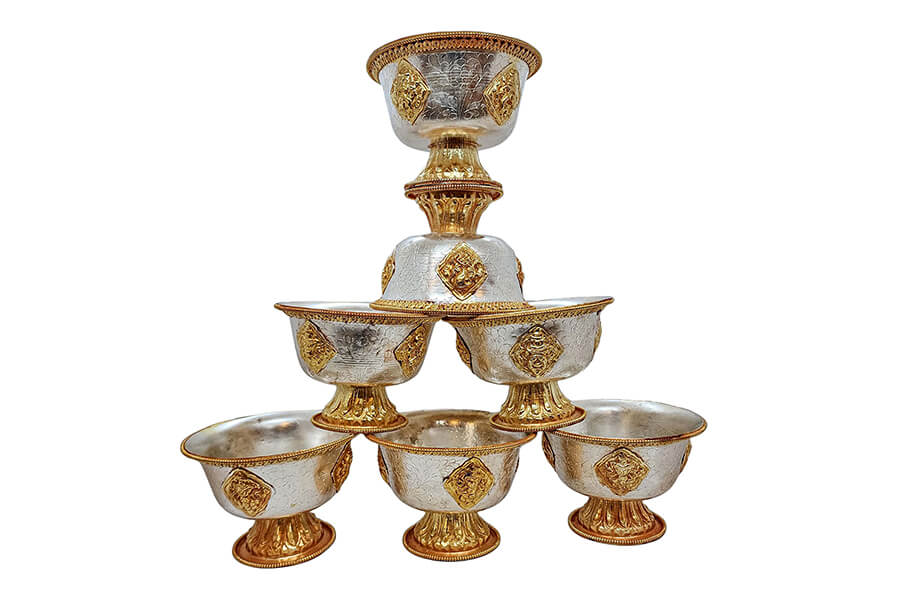
For authenticity, use traditional Bhutanese bowls, often handcrafted with intricate designs. This arrangement not only honors the Buddhas but also trains the practitioner in discipline and awareness.
Rules and Etiquette for Buddhist Water Offering Bowls
Observing proper etiquette for buddhist water offering bowls ensures the ritual's efficacy and respect. Always approach the altar with clean hands and body, removing shoes to maintain sanctity. Perform Yonchap in the morning, ideally before breakfast, to start the day with positive intentions. Avoid touching the bowls with unclean hands or during inauspicious times, like after arguments.
When filling, pour steadily without spilling, visualizing vast offerings multiplying infinitely. Recite prayers silently or aloud, dedicating merit to all beings. In temples, follow monastic guidance; for instance, at Tashichho Dzong, offerings are communal, fostering unity. Dispose of water respectfully—never down the drain, but onto clean earth or plants, with a prayer for growth.
If a bowl breaks, replace it promptly, as incomplete sets disrupt the symbolic completeness. These rules, drawn from Bhutanese traditions, emphasize intention over perfection, making the practice forgiving yet reverent.
Differences Between Bhutanese and Tibetan Water Offerings
While Bhutanese Yonchap and Tibetan water offerings share roots in Vajrayana, subtle differences highlight cultural nuances. Bhutanese typically use exactly seven bowls, focusing on the seven limbs, whereas Tibetan practices sometimes include an eighth for music, represented by a shell or bell.
In Bhutan, Seven Buddhist offering bowls are a household staple, integrated into daily life under Drukpa Kagyu lineage, emphasizing simplicity. Tibetan offerings, influenced by Nyingma or Gelug schools, might involve more elaborate visualizations or additional substances like saffron water.
Arrangement etiquette is similar, but Bhutanese pour water from left to right, emptying at dusk, while some Tibetan traditions vary by region.
From my comparative travels, Bhutanese Seven Bowls of water offering feel more community-oriented, often tied to national festivals, whereas Tibetan ones can be more monastic. Materials differ too: Bhutanese bowls often feature local craftsmanship with dragon motifs, contrasting Tibetan ones with turquoise inlays.
These variations enrich the Himalayan Buddhist tapestry, yet both aim for the same goal: enlightenment through generosity.