
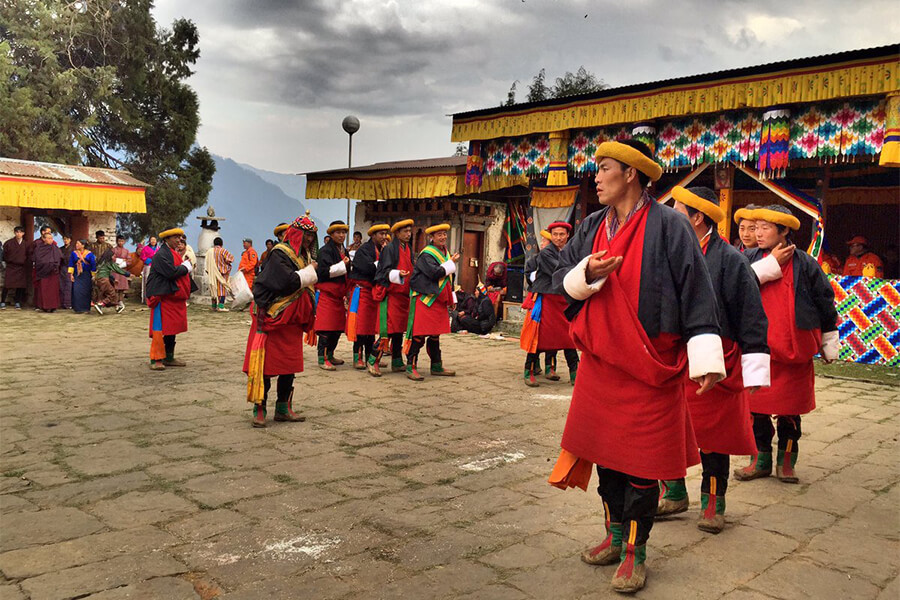
In the heart of the Himalayas, Bhutan preserves a rich tapestry of cultural expressions that captivate travelers from around the world. Among these, the Zhey Dance stands out as a profound embodiment of spiritual devotion and communal harmony. For those planning a journey to experience this living heritage, a wellcurated Bhutan tour package can provide immersive opportunities to witness such traditions firsthand, blending adventure with cultural depth. This traditional folk dance of Bhutan not only entertains but also conveys deep historical and philosophical meanings, making it an essential part of any visit to the kingdom.
What Is Zhey Dance?
The Zhey Dance is a captivating form of Bhutan traditional dance that originates from the mountainous regions of Bhutan. Literally translating to "dance" in the local language, it involves a group of performers engaging in rhythmic movements accompanied by melodic chants. Unlike many dances that incorporate instruments, the Zhey Dance relies solely on the voices of the dancers, who sing verses in rapid rhyme while executing precise steps. This creates an atmosphere of intensity and unity, where the pace builds gradually, drawing the audience into a trance like state of appreciation.
Performed exclusively by men, the Zhey Dance emphasizes discipline and coordination. Dancers move in synchronized patterns, their firm steps echoing the rugged terrain of Bhutan. Each performance typically lasts several minutes, but the energy invested makes it feel timeless. As an expert in Bhutanese cultural tours, I have witnessed how this dance fosters a sense of community during festivals, where locals and visitors alike gather to celebrate. It's not just entertainment; it's a ritual that honors deities, ancestors, and significant historical figures.
In practice, the Zhey Dance varies slightly by region, but its core remains rooted in spiritual themes. The dancers' attire, often vibrant and symbolic, adds layers of meaning, representing elements like protection, victory, and blessings. For travelers, understanding the Zhey Dance enhances the overall experience of Bhutanese festivals, where such performances are highlights. Drawing from my years guiding groups through remote villages, I recommend arriving early to secure a spot near the stage, allowing for a closer view of the intricate footwork and expressive gestures.
This Bhutanese traditional dance form is more than a spectacle; it serves as a bridge between the past and present, preserving oral histories through movement and song. Its simplicity in execution belies the depth of preparation required, with performers often rehearsing for months to perfect the harmony between voice and body.
The History and Origin of Zhey Dances
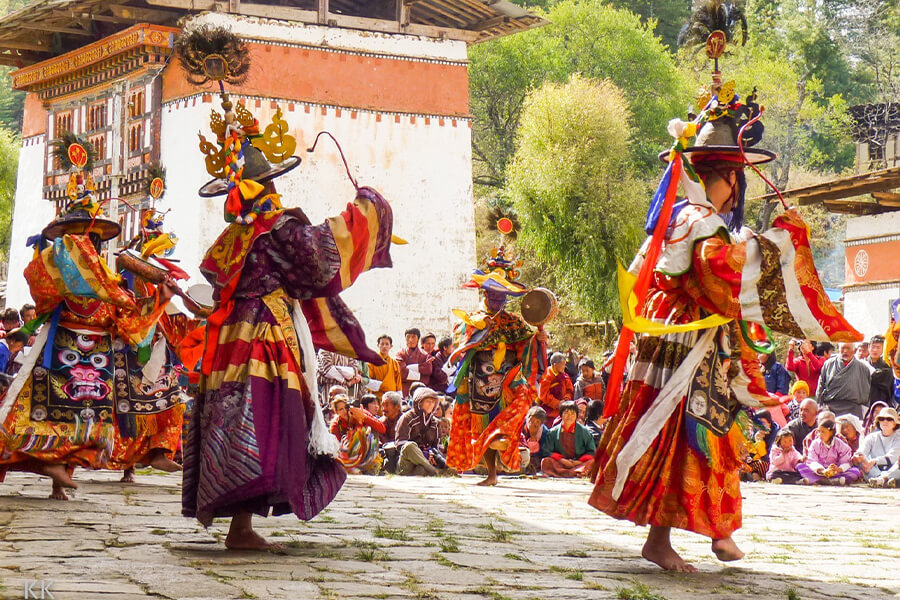
The roots of Zhey Dances trace back to ancient legends and pivotal moments in Bhutanese history, showcasing the kingdom's spiritual evolution. According to folklore, the dance emerged during the efforts of Tshangpa Jarey, a revered figure in the Drukpa Kagyu sect of Buddhism. He sought to construct a temple but faced obstacles from a malevolent demon disguised as a tortoise. Frustrated, Tshangpa Jarey composed a powerful song and accompanying dance, proclaiming his divine lineage as the son of Pelden Drukpa, rendering him invincible. Through this Zhey Dance, he subdued the demon, enabling the temple's completion. This tale underscores the dance's role as a tool for overcoming adversity through spiritual strength.
A significant milestone occurred in 1616 when Lama Zhabdrung Ngawang Namgyal, a key architect of Bhutan's unification, fled Tibet and entered Bhutan via the northern border at Gasa. Local inhabitants welcomed him with a performance of the Zhey Dance, symbolizing their unwavering devotion. This event cemented the dance's place in Bhutanese tradition, evolving it from a spontaneous ritual into a structured cultural practice. Historians, including those from the National Library of Bhutan, reference this as a turning point where Zhey Dances became intertwined with national identity.
Over centuries, Zhey Dances have adapted while retaining their essence. Influenced by Bhutan's isolation and Buddhist principles, they reflect themes of resilience and piety. In my travels across Bhutan, I've encountered elders in remote monasteries who recount how these dances were passed down orally, ensuring authenticity. Authoritative sources, such as the Bhutanese government's cultural preservation initiatives, highlight efforts to document and teach Zhey Dances to younger generations, preventing their fade into obscurity.
The dance's origin also ties to broader Himalayan cultural exchanges, yet it remains distinctly Bhutanese. Unlike similar rituals in neighboring regions, Zhey Dances emphasize vocal prowess over instrumental music, a trait that experts attribute to Bhutan's emphasis on mindfulness and vocal meditation. This historical depth makes Zhey Dances a trustworthy window into Bhutan's soul, free from modern embellishments.
Variations of the Zhey Dance
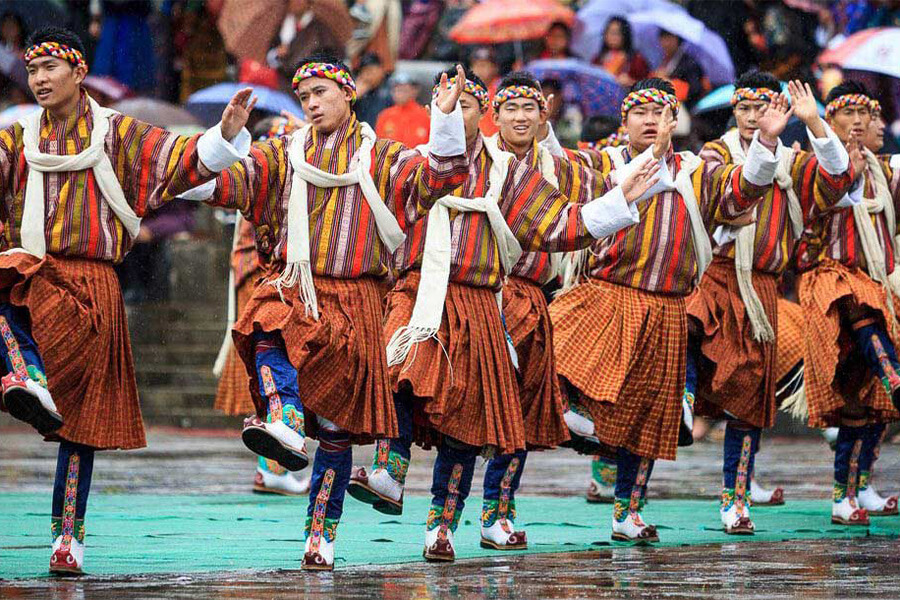
Bhutan's diverse geography and regional identities have given rise to multiple variations of the Zhey Dance, each tailored to local customs while sharing common themes of devotion and celebration. These differences manifest in attire, number of performers, and subtle nuances in steps, enriching the overall tapestry of Bhutan traditional dance. The four primary styles Goen Zhey from Gasa, Wang Zhey from Thimphu, Nub Zhey from Trongsa, and Wochubi Zhey from Paro form the cornerstone, but other districts have developed their own, though some are rarely performed today.
For instance, the Ngayngbi Zhey from Bumthang incorporates elements inspired by local harvest rituals, blending agricultural motifs into the movements. Similarly, the Kabjisa Zhey from Punakha features a more fluid style, reflecting the valley's riverine landscape. The Do Zhey and Kawang Zhey from Paro and Thimphu, respectively, add layers of complexity with extended verses. While not as prominent, these variations demonstrate Bhutan's cultural adaptability.
In my experience leading cultural expeditions, observing these variations during tshechus (festivals) reveals how they foster regional pride. Experts from the Royal Academy of Performing Arts in Thimphu often conduct workshops on these styles, ensuring their preservation. This diversity makes the Zhey Dance a dynamic element of Bhutanese traditional dance, appealing to those seeking authentic experiences.
Zhey Dance Steps and Their Meanings
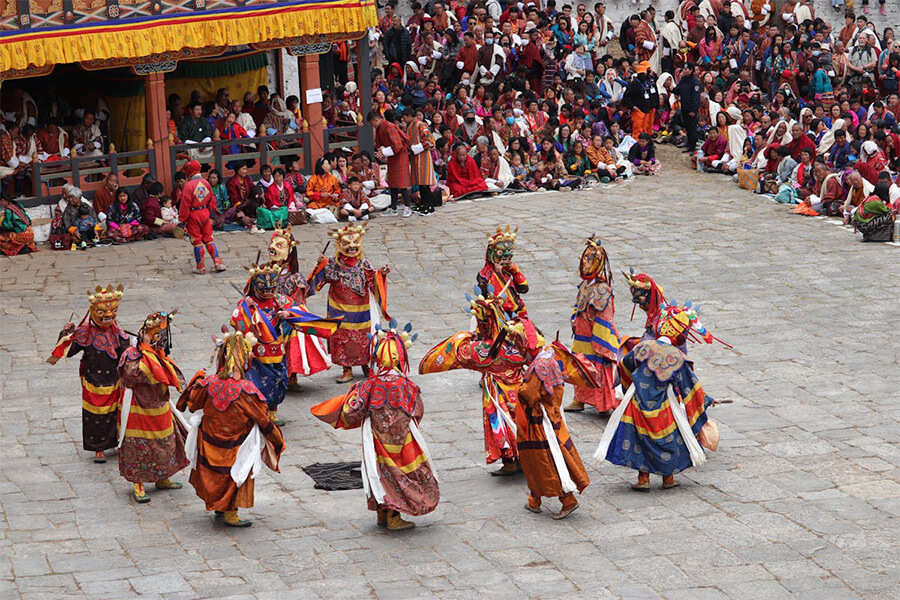
The steps in a Zhey Dance are not arbitrary; each carries profound symbolism, rooted in Buddhist philosophy and historical narratives. Performers follow a predetermined sequence, with the number of steps varying by variation, but all emphasize precision and intent. These movements convey respect, offerings, and invocations, turning the dance into a moving prayer.
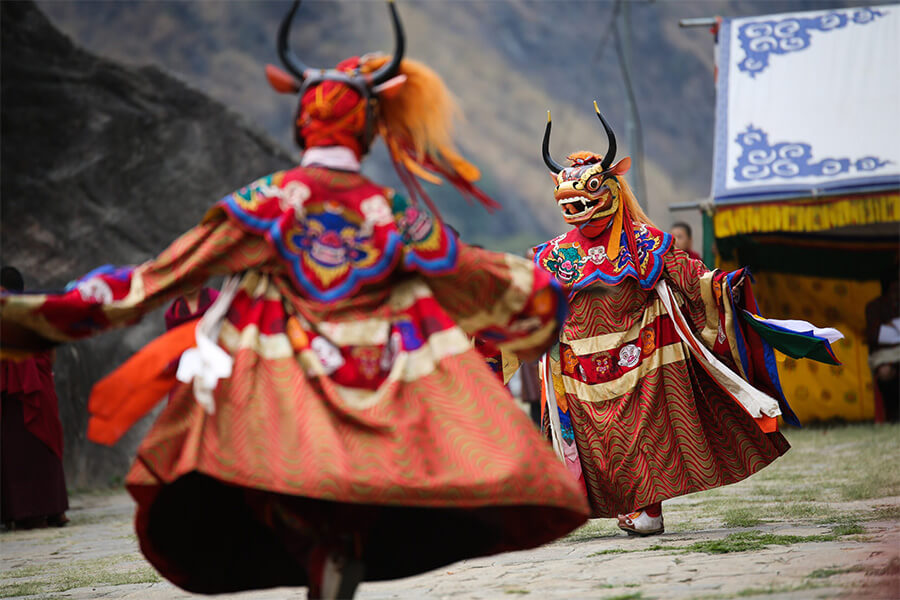
Understanding these steps requires appreciating their context. From my firsthand observations at festivals, the gradual acceleration in pace mirrors life's challenges, building to a climactic resolution. Knowledgeable guides, like those from Bhutan's tourism council, explain that mastering these steps demands years of practice, highlighting the dance's role in personal discipline.
Goen Zhey (Gasa)
As the oldest form of Zhey Dance, Goen Zhey holds a special place, originating from the welcome extended to Lama Zhabdrung Ngawang Namgyal. It features 21 dancers executing 13 distinct steps, each dedicated to specific elements of reverence.
The performance begins with Sa chak, an initiatory step that sets the sacred tone. Following is Chak tshelma, honoring spiritual teachers, deities, and ancestors through bowed gestures. Shar pharley thridu welcomes guests, symbolizing hospitality integral to Bhutanese culture.
Tshopa namyang tshok dedicates to the assembly, fostering unity. Norbu dungkar acknowledges the conch shell's preciousness in Buddhism, with circular motions evoking its sound. Tsel sum pa reveres the sky, sun, and rays as powerful forces.
Zhuk drel praises the assembly's excellence, while Pa tsha highlights the cane's utility, perhaps alluding to guidance. Chamshok celebrates the dance itself, with energetic leaps. Jachen ngangpa invokes the giant swan, a symbol of grace.
Meto kumud offers lotus and water to deities, purifying the space. Thridu nyima jugjug prays for the wellbeing of teachers and ancestors. Finally, Chaluk lekchi chaluk lek concludes with a prayer, sealing the ritual.
In terms of attire, the lead dancer dons a chamok helmet and colorful scarf, while others wear kopak headbands, white scarves, red woolen ghos, black tegos, yuelham boots, and patas swords. This ensemble represents warrior like devotion. During a Gasa Tshechu I attended, the raw energy of Goen Zhey left an indelible mark, illustrating its timeless appeal.
Nub Zhey (Trongsa)
Nub Zhey, performed by villagers from Jee in Trongsa, honors local deities and features 22 steps, making it one of the more elaborate variations. Its name derives from the local Zha ked dialect, adding a linguistic layer to its cultural significance.
The steps build upon themes of devotion, with intricate patterns that demand high coordination. For example, early steps invoke protection, while later ones celebrate victory over adversities, mirroring Bhutan's historical struggles.
Dancers wear red ghos symbolizing Buddhist devotion, blue tegos representing medicinal herbs, khamars as vows of precept adherence, ko ilhams for regional control, dungkar gi along conch rings for victory, and thoe headbands for teachings. This attire, observed at Trongsa Tshechu, evokes a sense of solemnity.
From my expertise, Nub Zhey's extended sequence allows for deeper storytelling, engaging audiences longer. Preservation efforts by local communities ensure its continuity, as noted in authoritative cultural reports.
Wochubi Zhey (Paro)
Introduced by residents of Wochu near Dzongdrakha monastery, Wochubi Zhey comprises 18 steps, blending grace with symbolism. It draws from pigeon imagery, signifying peace and messenger roles in folklore.
Steps include offerings and invocations, with fluid motions that contrast the firmness of other styles. This variation highlights adaptability, incorporating local monastic influences.
Attire features green leaf headbands, black tegos, khamars, and yuelham boots, embodying the pigeon's essence. At Paro Tshechu, where I've guided groups, the dance's elegance stands out against the dramatic dzong backdrop.