
Anyone who has spent time in a Bhutanese monastery at dawn will remember the smell first: butter lamps, juniper incense, and something warm and slightly savory drifting from the kitchen behind the temple hall. That last scent usually belongs to the Serkem Offering, one of the most quietly powerful rituals in Vajrayana Buddhism. For travelers who join a Bhutan tour hoping to understand the country beyond its postcard monasteries, witnessing a Serkem ceremony is often the moment Bhutanese spiritual life stops feeling abstract and starts feeling real.
This article explains what the Serkem Offering is, where it comes from, how it is performed, and why butter tea holds such a special place in Himalayan Buddhist practice. Drawing on firsthand observation of monastic rituals across Bhutan and established Vajrayana teachings, this guide aims to give travelers, students of Buddhism, and the simply curious an accurate, respectful understanding of this ancient tradition.
What Is the Serkem Offering?
What does the Serkem Offering mean?
The word "Serkem" comes from Tibetan, roughly translating to "golden drink" or "golden libation." In practice, it refers to a Buddhist tea offering made to enlightened beings, protector deities, and spiritual guardians, most commonly using butter tea, though chang (barley beer) or plain water may sometimes be substituted depending on the occasion and the deity being honored.
Unlike a simple act of hospitality, the Serkem Offering is a formal ritual with prescribed steps, mantras, and symbolic meaning. It is performed daily in many Bhutanese households and monasteries, and more elaborately during festivals, consecrations, and important ceremonies.
Why is it an important Buddhist tea offering?
The Serkem Offering matters because it embodies core Buddhist values of generosity, gratitude, and interconnectedness. Offering something warm and nourishing, rather than something merely symbolic, reflects the practical, grounded nature of Himalayan Buddhism, where spiritual devotion is woven into everyday domestic life rather than confined to temple walls.
For Bhutanese families, the ritual also serves a protective function. It is believed to please local deities and Dharma protectors, maintaining harmony between the human world and the unseen spiritual landscape that Bhutanese culture takes very seriously.
The Origins of the Tibetan Serkem Offering
The roots of the Tibetan Serkem Offering trace back to pre-Buddhist Bon traditions of the Tibetan plateau, where liquid offerings to mountain spirits and local deities were already common practice. When Buddhism spread through Tibet and later into Bhutan from the 7th century onward, many of these indigenous rituals were not discarded but absorbed and reinterpreted within a Buddhist framework.
Guru Rinpoche, also known as Padmasambhava, is widely credited with formalizing many of these practices as he traveled through the Himalayas in the 8th century, subduing local spirits and binding them as protectors of the Dharma. The Serkem Offering became one of the ritual tools used to maintain that pact, a way of continually honoring the agreement between practitioners and the guardian spirits of the land.
Bhutan, having developed its own distinct school of Vajrayana Buddhism under the Drukpa Kagyu lineage from the 12th century onward, preserved and adapted these tea offering customs into its national religious identity. Today, the ritual remains largely unchanged from its historical form, a rare example of living tradition rather than reconstructed ceremony.
Tea Offering in Bhutan: How the Ritual Is Performed
Preparing the altar and offering vessels
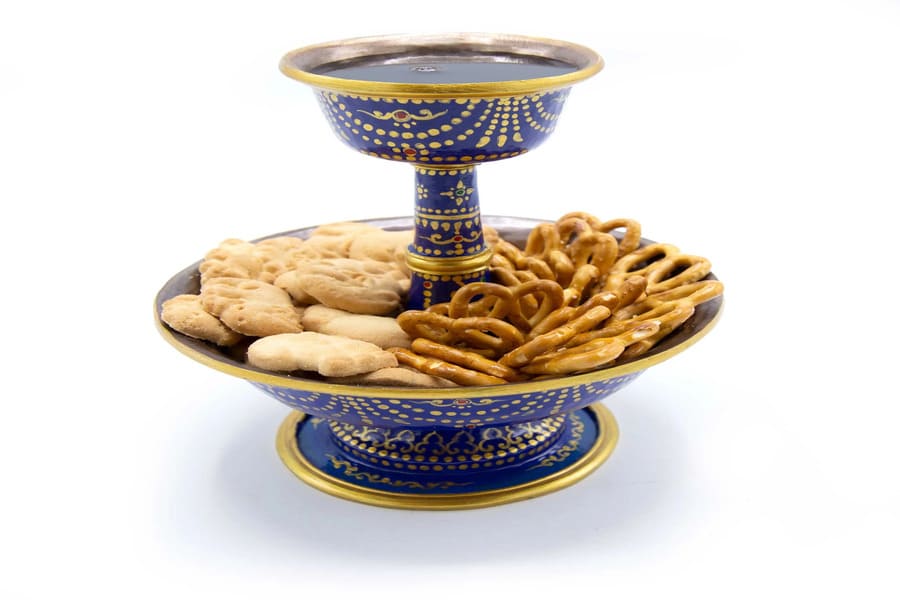
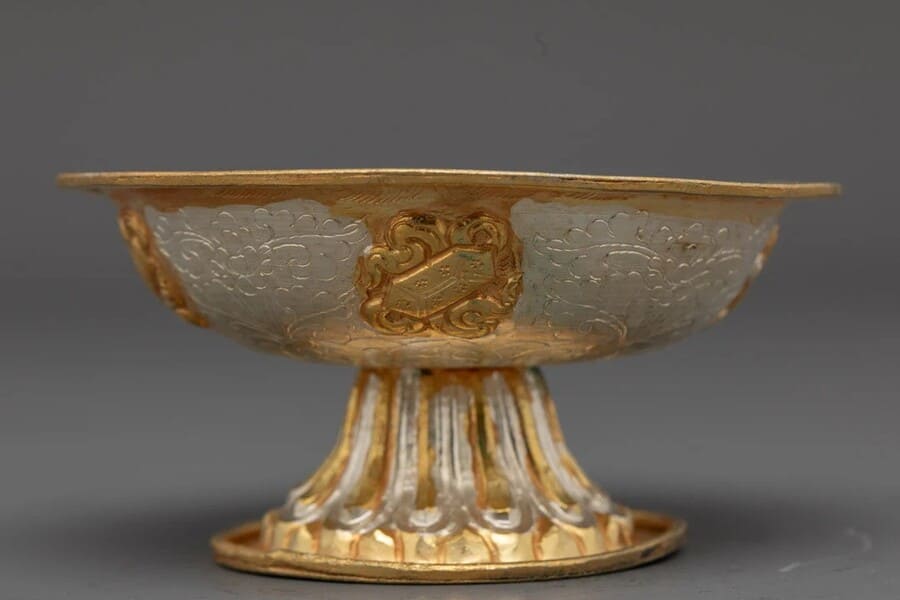
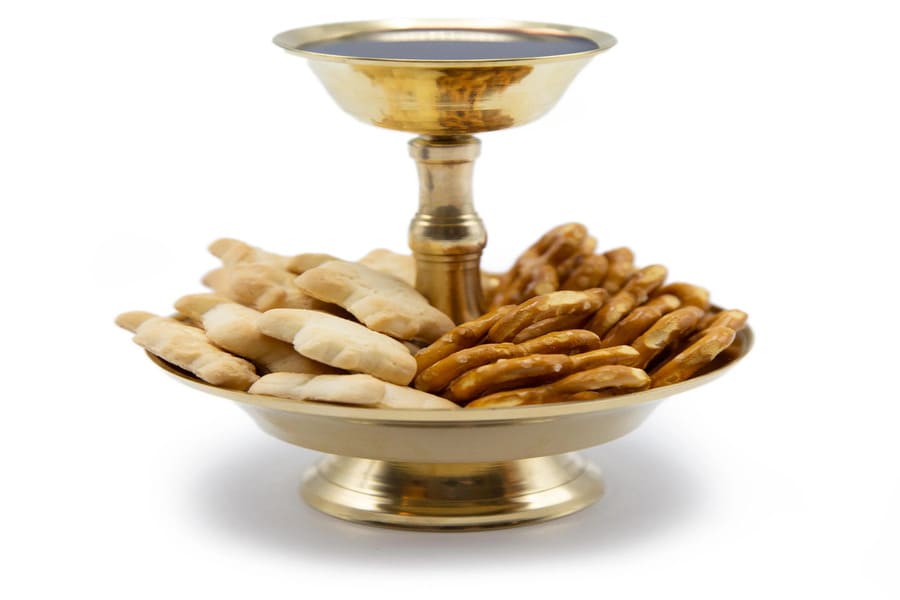
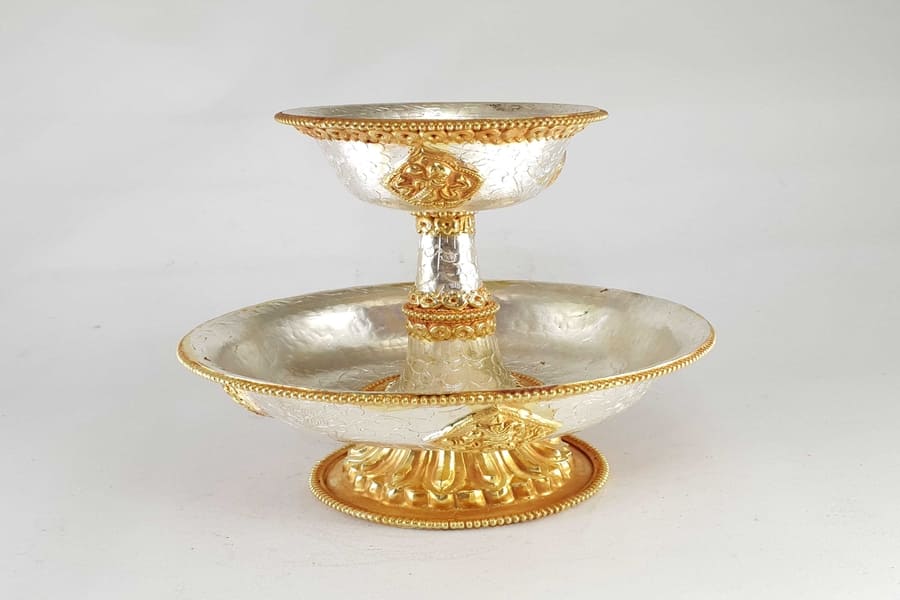
Before any tea offering in Bhutan begins, the household shrine or temple altar is cleaned and arranged. Traditional offering bowls, usually made of silver, copper, or brass, are polished and set in a row. Practitioners typically place seven bowls on the altar, representing the seven traditional offerings in Tibetan Buddhist practice, though the number can vary depending on the household or monastery's customs.
Making a butter tea offering
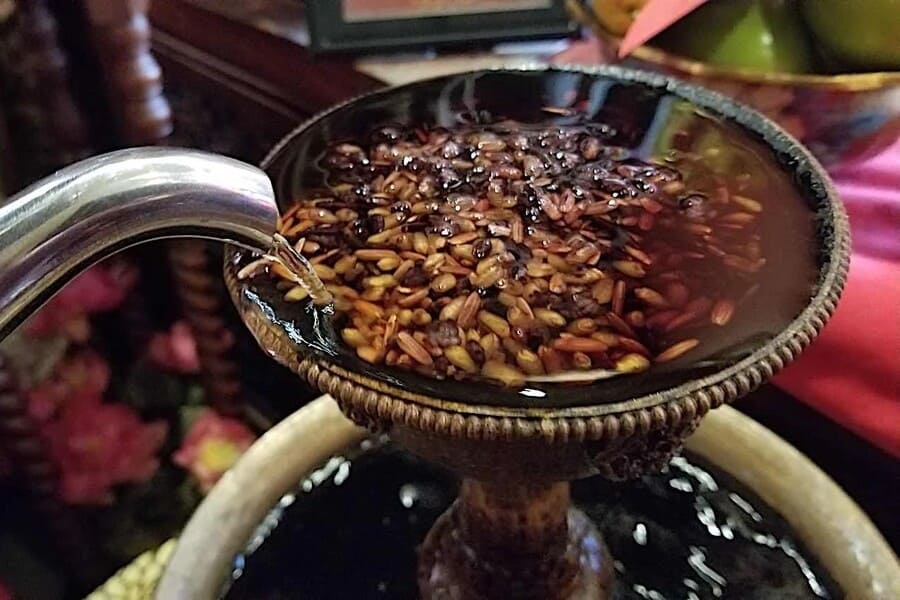
The butter tea offering itself begins in the kitchen. Bhutanese butter tea, known locally as suja, is brewed from black tea leaves churned with yak or cow butter and salt. The tea must be freshly made and still warm when offered, since a lukewarm or cold offering is considered disrespectful.
A small amount of tea is poured into a special offering vessel, often a long-spouted kettle reserved solely for ritual use. The person performing the offering then carries it to the altar or to significant points around the home or monastery grounds.
Reciting prayers and mantras
As the tea is poured, drop by drop, into the offering bowls or onto the ground outside, specific prayers and mantras are recited. These invocations typically call upon Dharma protectors, local deities, and enlightened beings, inviting them to accept the offering and requesting their continued protection and blessings.
The pouring is deliberate and unhurried. In many households, the eldest family member or a senior monk leads the recitation while younger members assist, making the ritual an informal but meaningful transmission of religious knowledge between generations.
Completing the Bhutan tea offering ritual
Once the offering bowls are filled and the prayers concluded, the Bhutan tea offering ritual typically closes with a final gesture of respect, often a bow or a moment of silent prayer. Any remaining tea from the offering vessel may be shared among family members as a blessed substance, or in some traditions, left untouched until the following day's ritual.
What Is Used in a Bhutan Tea Offering Ritual?
Traditional Serkem offering vessels
The vessels used matter as much as the liquid itself. Traditional offering sets include a ritual kettle for pouring, a collection of small metal bowls, and sometimes a dedicated tray to catch any spillage, which is treated respectfully rather than discarded carelessly. Silver and copper vessels are favored for their durability and symbolic purity, and many families pass these down as heirlooms.
Butter tea and other offerings
While butter tea is the most common liquid used, some ceremonies call for chang, milk, or plain water, particularly in households or regions where butter tea is less commonly prepared daily. Regardless of the liquid chosen, the intention behind the offering, generosity and devotion, remains the defining element of the ritual.
Incense, butter lamps, and ritual objects
A proper Serkem ceremony is rarely performed in isolation. Butter lamps are lit alongside the offering, their flickering light symbolizing the dispelling of ignorance. Juniper incense, known as sang, is often burned simultaneously, its smoke believed to carry offerings and prayers upward to the deities being honored.
Sacred texts and ceremonial instruments
In monastic settings, monks may chant from specific liturgical texts written for Serkem offerings, accompanied by ritual instruments such as bells, hand drums, or cymbals. These instruments mark different stages of the ceremony and help maintain the rhythm of collective chanting during larger monastic gatherings.
When Is the Serkem Offering Performed?
The Serkem Offering has no single fixed schedule, which is part of what makes it such a living practice. Many devout Bhutanese households perform a simplified version daily, often in the early morning before breakfast, as part of a broader routine of altar offerings that also includes water bowls and incense.
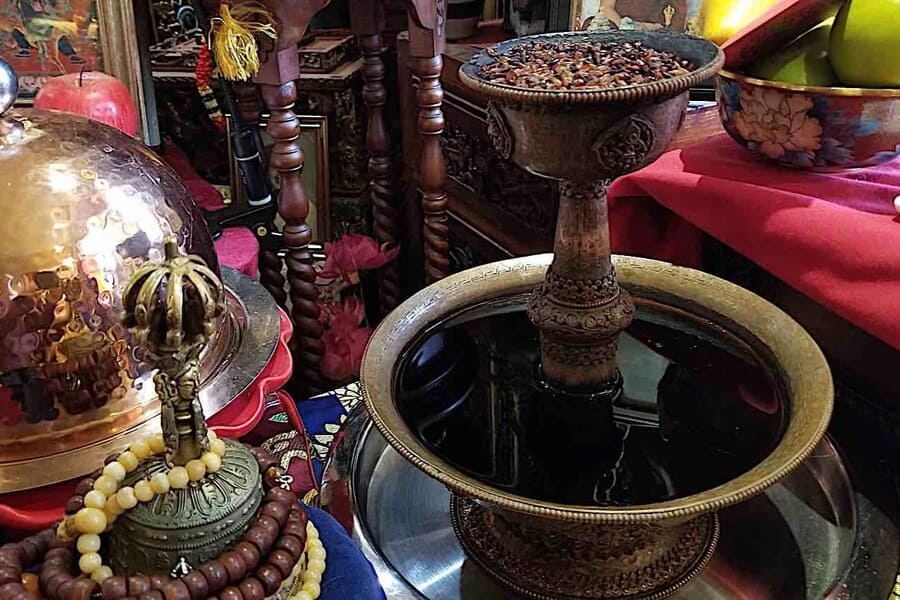
More elaborate Serkem ceremonies take place during specific occasions, including the consecration of a new home or temple, the start of important journeys, annual monastic rituals, and major festivals such as Tshechu celebrations, where tea offerings often accompany the masked dances performed in monastery courtyards. Travelers visiting Bhutan during festival season have a good chance of witnessing these expanded versions of the ritual firsthand, usually performed before the day's public festivities begin.
Who Receives a Buddhist Tea Offering?
Dharma Protectors
Dharma protectors, known as Chokyong in Tibetan and Dzongkha traditions, are considered the primary recipients of most Serkem offerings performed in Bhutanese temples. These wrathful deities are tasked with defending Buddhist teachings and practitioners from obstacles, and regular offerings are believed to keep their protective vows active.
Guru Rinpoche and lineage masters
Given his central role in bringing Buddhism to the Himalayas, Guru Rinpoche is frequently honored during Serkem ceremonies, particularly in temples and caves associated with his historical journeys, such as the famous Taktsang Monastery. Offerings may also be dedicated to the founding masters of specific monastic lineages, honoring the unbroken transmission of teachings from teacher to student.
Guardian deities in Bhutanese Buddhism
Beyond formal Dharma protectors, Bhutanese homes and communities often maintain offerings to local guardian deities associated with mountains, rivers, and specific villages. These localized spirits, inherited from older animist traditions, remain an active part of Bhutanese spiritual life, and Serkem offerings help maintain a respectful relationship with them.
Enlightened beings in Vajrayana tradition
Finally, Serkem offerings may be dedicated broadly to Buddhas, Bodhisattvas, and other enlightened beings within the Vajrayana tradition, as an expression of devotion rather than a request for protection specifically. This reflects the dual nature of the ritual, serving both practical and purely devotional purposes depending on the context and intention of the practitioner.
Frequently Asked Questions About the Serkem Offering
What is the purpose of the Serkem Offering?
The Serkem Offering serves to express gratitude, generosity, and devotion toward enlightened beings and protector deities, while also maintaining spiritual harmony between practitioners and the unseen forces believed to influence daily life in Bhutanese culture.
Why is butter tea commonly used?
Butter tea is a staple beverage throughout the Himalayas, valued for its warmth and nourishment in a cold climate. Offering something genuinely valuable and commonly consumed, rather than a purely symbolic item, reflects the practical spirituality central to Bhutanese Buddhist practice.
Can anyone perform a Serkem Offering?
Yes. While elaborate monastic versions are typically led by ordained monks, simplified household Serkem offerings can be performed by laypeople, including family elders, as part of regular daily devotional practice.
Is the tea consumed after the ceremony?
In many households, yes. Tea remaining after the offering is often regarded as blessed and may be consumed by family members, though customs vary between regions and individual traditions.
How is the Serkem Offering different from other Buddhist tea offerings?
While various Buddhist traditions across Asia include tea in their offering practices, the Serkem Offering is distinct in its specific Tibetan and Himalayan origins, its association with Dharma protectors and local deities, and its structured use of butter tea alongside dedicated ritual vessels and mantras, making it a uniquely Himalayan expression among broader Buddhist tea offering customs.
Understanding the Serkem Offering offers a meaningful window into the everyday spirituality of Bhutan, a country where ancient ritual and daily life remain deeply intertwined. For travelers planning a visit, witnessing this ceremony, even briefly, adds a layer of authenticity and respect to any journey through the Land of the Thunder Dragon.