
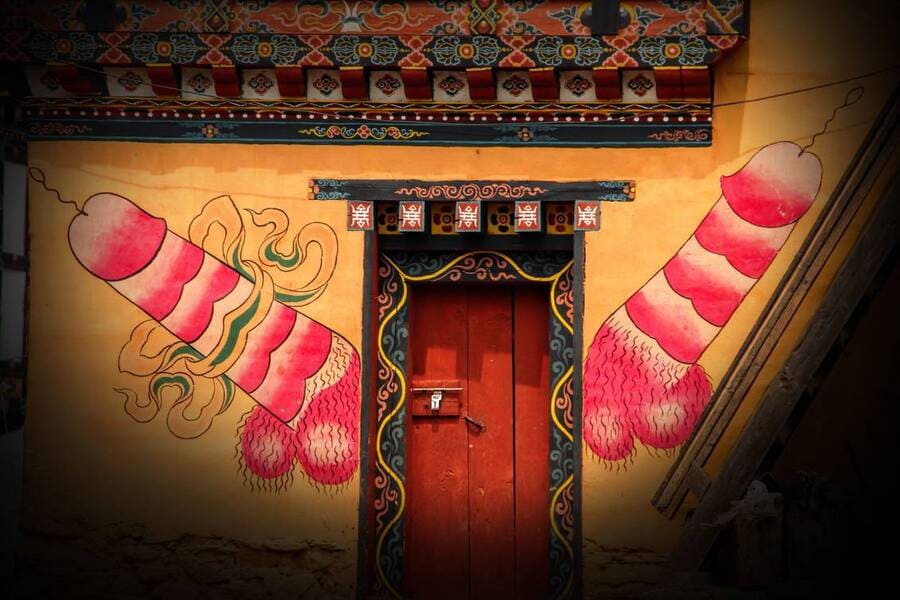
Nestled in the folds of the Eastern Himalayas, Bhutan is a kingdom unlike any other. Travelers who book bhutan tours often arrive expecting majestic monasteries, prayer flags fluttering against mountain skies, and a culture rooted in Buddhist philosophy. What many do not expect is to walk through a village and find brightly painted phalluses adorning the walls of almost every home. Far from being a crude curiosity, phallus worship in Bhutan is a deeply respected spiritual tradition that has shaped Bhutanese cultural identity for centuries. Understanding this practice opens a fascinating window into the country's unique blend of Vajrayana Buddhism, Tantric philosophy, and ancient folk belief.
What Is Phallus Worship in Bhutan?
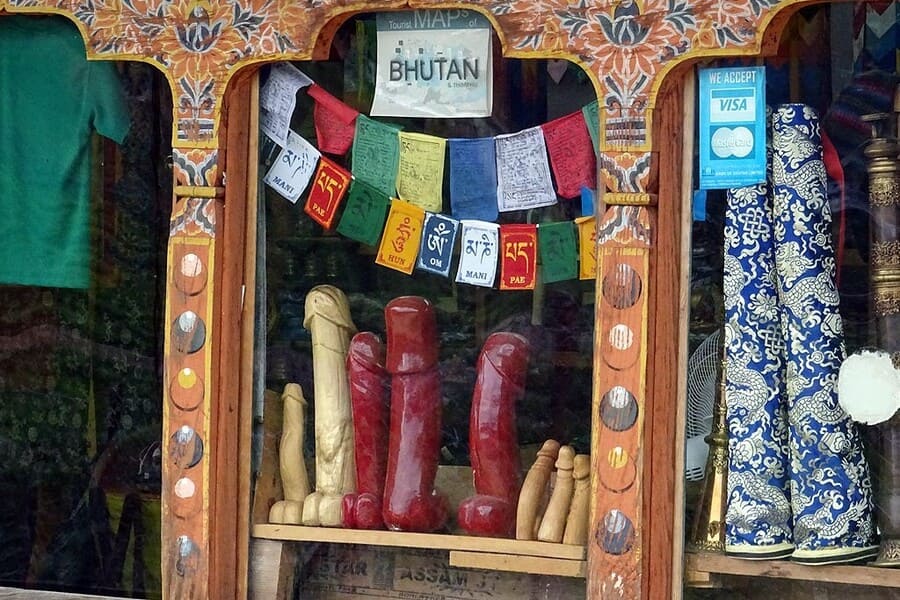
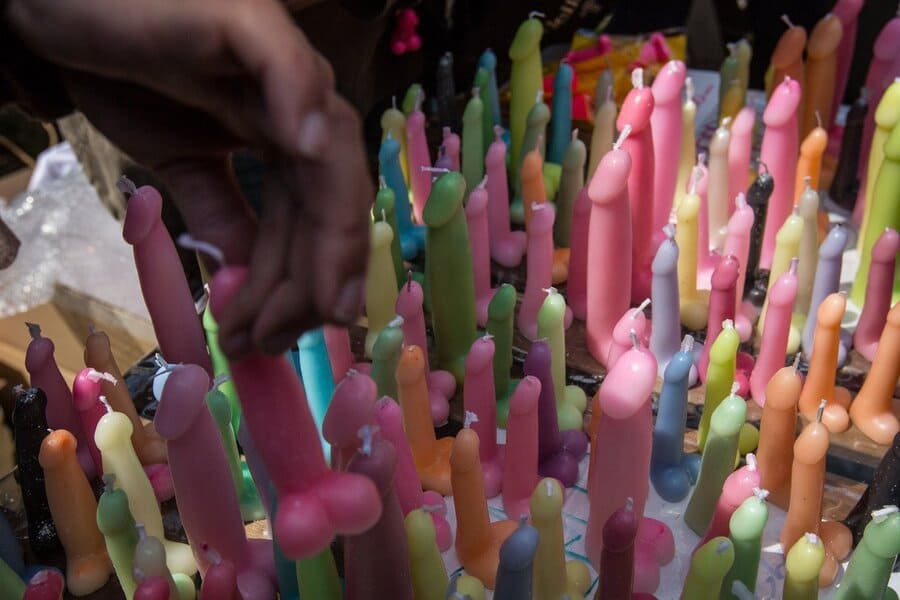
Phallus worship in Bhutan refers to the widespread veneration of the phallus as a sacred symbol of protection, fertility, and spiritual power. Unlike many cultures where such imagery might be considered taboo, Bhutanese society treats the phallus with reverence, humor, and deep symbolic meaning. You will find phallus paintings on house walls, wooden phallus carvings hanging from rooftops, and phallus-shaped objects sold openly in market stalls across towns like Thimphu and Punakha.
This is not shock art or irreverence. It is a living tradition that connects ordinary Bhutanese families to their spiritual heritage. The symbol is believed to ward off evil spirits, deflect gossip and malicious intent, and invite blessings of abundance and fertility into the household. Visitors are encouraged to approach this tradition with an open mind and genuine curiosity, as locals take great pride in explaining its significance.
The Origins of Bhutan's Sacred Phallus Tradition
The roots of phallus worship in Bhutan are most commonly traced to the life and teachings of Drukpa Kunley, a revered 15th to 16th century Tibetan Buddhist master known as the divine madman Bhutan devotees venerate to this day. Born in Tibet around 1455, Drukpa Kunley traveled extensively across Bhutan and Tibet, teaching Buddhist philosophy through unorthodox and often shocking methods that defied conventional monastic behavior.
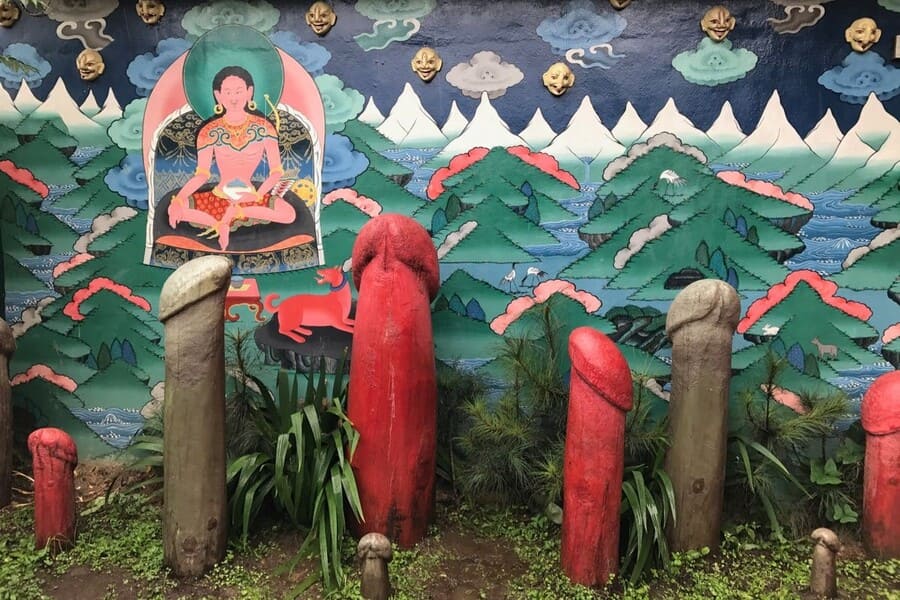
Drukpa Kunley, the divine madman bhutan tradition celebrates, rejected formal religious structures and used provocative behavior, crude humor, and unconventional methods to liberate people from ego and illusion. He believed that attachment to form, propriety, and social convention was the root of spiritual blindness. His "thunderbolt of flaming wisdom," a term he used for his phallus, became a symbol not of vulgarity but of enlightened power capable of subduing demons and clearing spiritual obstacles.
According to Bhutanese legend, Drukpa Kunley subdued a demon at Dochu La pass by pinning it to the ground with his phallus, transforming it into a dog that became his companion. Stories like this one reinforced the idea that the phallus carried protective and transformative spiritual power. Over generations, this iconography became woven into the fabric of Bhutanese daily life.
What Does the Bhutan Phallus Symbol Represent?
The bhutan fertility symbol carries multiple layers of meaning that go far beyond procreation. At its most fundamental level, the phallus symbol bhutan communities revere represents:
Fertility and Abundance: In an agrarian society where harvests determined survival, symbols of life-giving power were essential. The phallus represented the generative force of nature, capable of bringing forth crops, livestock, and children.
Protection from Evil: Bhutanese folk belief holds that malicious spirits, envious neighbors, and negative energies are repelled by the phallus symbol. This protective function explains why it is placed prominently on the exterior walls of homes, at crossroads, and above doorways.
Spiritual Power and Enlightenment: Rooted in Tantric Buddhist philosophy, the phallus represents the union of skillful means and wisdom, two foundational concepts in Vajrayana Buddhism. This esoteric dimension gives the symbol a philosophical weight that extends well beyond fertility.
Good Luck and Prosperity: Many Bhutanese hang wooden phalluses in their homes or businesses as talismans meant to attract favorable fortune, much the way other cultures might hang horseshoes or evil eye amulets.
The bhutan phallus tradition therefore operates simultaneously as folk belief, spiritual practice, and cultural identity, making it one of the most layered and fascinating traditions in South Asian religious history.
Why Are Bhutan Phallus Paintings Seen Everywhere?
First-time visitors are often surprised by just how ubiquitous the bhutan phallus imagery is across the country. From the Paro Valley to rural villages in Bumthang, painted phalluses appear on walls, buildings, and household items with a frequency that signals genuine cultural integration rather than novelty.
Phallus Symbols on Houses and Buildings
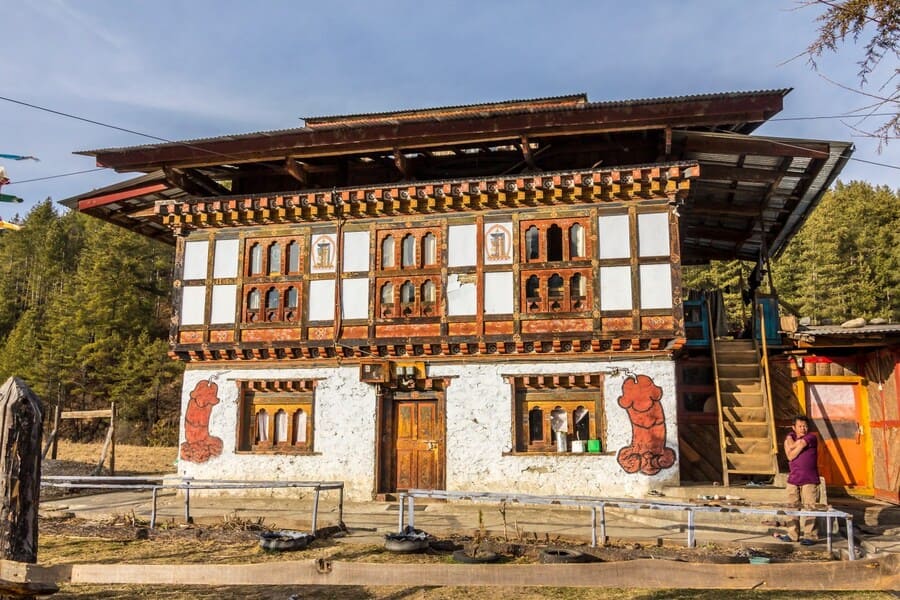
The most common place to encounter the phallus symbol bhutan culture preserves is on the exterior walls of traditional Bhutanese homes. These paintings are typically rendered in vivid colors, often depicting crossed phalluses with decorative ribbons, flames, or ejaculating imagery. The placement is intentional and strategic. By positioning the symbol where it is clearly visible to passersby, homeowners are believed to neutralize the "evil eye," a concept in Bhutanese folk belief where envy or malicious stares from others can bring misfortune to a household.
Some of the most elaborate phallus murals can be found in the Punakha district and the villages surrounding Lobesa, areas closely associated with Drukpa Kunley. Here, the paintings are particularly large and detailed, reflecting the region's strong historical connection to the divine madman's legacy.
Wooden Phallus Talismans Hanging from Roofs
Beyond painted murals, it is common to see carved wooden phalluses hanging from the eaves of Bhutanese homes and monasteries. These three-dimensional talismans serve the same protective purpose as the painted versions. They are typically crafted from wood and may be decorated with ribbons or small bells. In some regions, they are also placed in fields or near water sources as offerings to local deities associated with fertility and agricultural abundance.
Artisan shops throughout Bhutan sell these carved phalluses as souvenirs, and they represent one of the most purchased items by international visitors. They come in a range of sizes, from small keychain versions to large display pieces, and buying one is considered a meaningful way to take a piece of Bhutanese spiritual tradition home.
Chimi Lhakhang – Bhutan's Famous Fertility Temple
No discussion of phallus worship in Bhutan would be complete without detailed attention to Chimi Lhakhang, the most famous fertility temple in the country. Located near the town of Lobesa in the Punakha Valley, this temple is dedicated entirely to Drukpa Kunley and draws thousands of pilgrims and visitors each year.
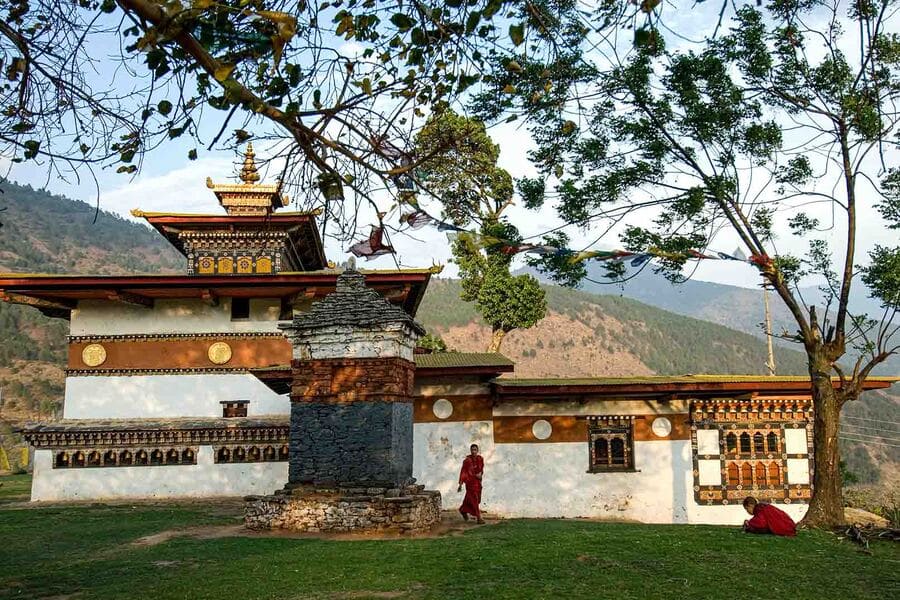
The temple sits atop a small hill surrounded by rice paddies and can be reached after a pleasant 20 to 30 minute walk through traditional Bhutanese farmland. The approach itself is part of the experience, offering visitors a glimpse of rural Bhutanese life before arriving at the sacred site.
Fertility Blessing Rituals
Inside Chimi Lhakhang, monks perform blessing rituals using a wooden phallus said to be a relic connected to Drukpa Kunley himself. The ritual involves the monk tapping the wooden phallus on the head of the person seeking blessing, a gesture believed to channel the divine madman's spiritual energy and confer the desired boon.
The blessings most frequently sought at Chimi Lhakhang are related to conception and safe childbirth. Couples who have struggled with infertility travel from across Bhutan and even from neighboring countries to receive these blessings. The temple also offers blessings for general good fortune, protection, and spiritual merit.
Visitors should be prepared to participate respectfully. Remove shoes before entering, dress modestly, and follow the guidance of the monks or attendants present. Photography policies vary and should be confirmed at the entrance.
Why Couples Visit the Temple
The reputation of Chimi Lhakhang as a bhutan fertility symbol site of miraculous efficacy has been reinforced over generations through personal testimonies. Many Bhutanese families credit successful pregnancies to pilgrimages made to this temple. These stories circulate widely through communities and continue to draw new visitors seeking similar blessings.
Beyond the personal motivation, visiting the temple is also seen as an act of devotion to Drukpa Kunley, whose unconventional teachings many Bhutanese credit with deepening their spiritual understanding. The temple thus serves both as a place of personal petition and as a site of communal religious identity.
Couples visiting Bhutan on honeymoon or for fertility purposes often include Chimi Lhakhang as a meaningful stop on their itinerary. Tour operators familiar with Bhutanese culture can arrange visits that are sensitive to the temple's sacred character while ensuring guests have a meaningful experience.
Frequently Asked Questions About Phallus Worship in Bhutan
Why is the phallus considered sacred in Bhutan?
The phallus is considered sacred in Bhutan due to its connection with the teachings and legendary deeds of Drukpa Kunley, the 15th-century Tantric master known as the divine madman. In Vajrayana Buddhist philosophy, the phallus represents the union of wisdom and compassion, while in Bhutanese folk belief it serves as a powerful protector against evil spirits and negative energies. The symbol has been integrated into daily spiritual life for centuries, giving it both religious and cultural legitimacy.
Who was the Divine Madman of Bhutan?
The divine madman bhutan tradition honors is Drukpa Kunley, born in Tibet around 1455. He was a Tantric Buddhist master who rejected formal monastic conventions and chose instead to teach through humor, provocation, and unconventional behavior. He traveled widely across Bhutan and Tibet, subduing demons, composing bawdy poetry, and challenging people to see through the illusions of social propriety and ego. His legacy is deeply embedded in Bhutanese spiritual culture, and he is venerated as a saint whose methods, however unusual, led many to genuine spiritual liberation.
Can tourists visit Bhutan's fertility temples?
Yes, tourists are welcome to visit Chimi Lhakhang and other sites associated with phallus worship in Bhutan. The country's tourism infrastructure is well-developed, and many licensed guides are knowledgeable about the religious and cultural context of these sites. Visitors are expected to dress modestly, remove footwear when entering sacred spaces, and approach the experience with respect. Receiving a blessing at Chimi Lhakhang is open to people of all backgrounds and beliefs.
Is it respectful to photograph Bhutan phallus paintings?
Photographing bhutan phallus murals on the exterior of houses and public buildings is generally acceptable and commonly done by tourists. However, it is important to ask permission before photographing private homes or entering someone's property for a closer look. Inside temples and sacred spaces, photography is often restricted or prohibited entirely. Always follow posted guidelines and the instructions of monks or temple attendants. Approaching the subject with genuine curiosity and respect rather than mockery is essential to ensuring a positive interaction with local communities.
What is the connection between the phallus symbol and fertility?
The bhutan fertility symbol connection to the phallus is both practical and philosophical. At the most direct level, the phallus is a universal symbol of generative power and procreation. In the Bhutanese context, this is amplified by the Tantric Buddhist understanding of creative energy as a force that animates all existence. The deity Drukpa Kunley, whose "thunderbolt of wisdom" was believed to transform and bless everything it touched, reinforced this connection. Over time, the phallus became associated specifically with the blessing of children, making temples like Chimi Lhakhang important pilgrimage destinations for those seeking to start or expand their families.
Final Thoughts
Phallus worship in Bhutan is one of those rare cultural phenomena that challenges visitors to expand their understanding of what sacred means. In a world where such imagery is routinely sexualized or commercialized, Bhutan offers a profound counterexample: a living tradition in which the phallus is treated with sincere spiritual reverence, philosophical depth, and even gentle humor. It is a tradition born from the teachings of an extraordinary mystic, sustained by centuries of community belief, and expressed through art, architecture, and ritual that continues to this day.
For travelers willing to engage with this tradition on its own terms, phallus worship in Bhutan becomes one of the most memorable and thought-provoking aspects of a visit to this extraordinary kingdom. It is a reminder that spiritual traditions take many forms, and that true understanding begins with curiosity, humility, and a willingness to see the world through eyes very different from our own.