
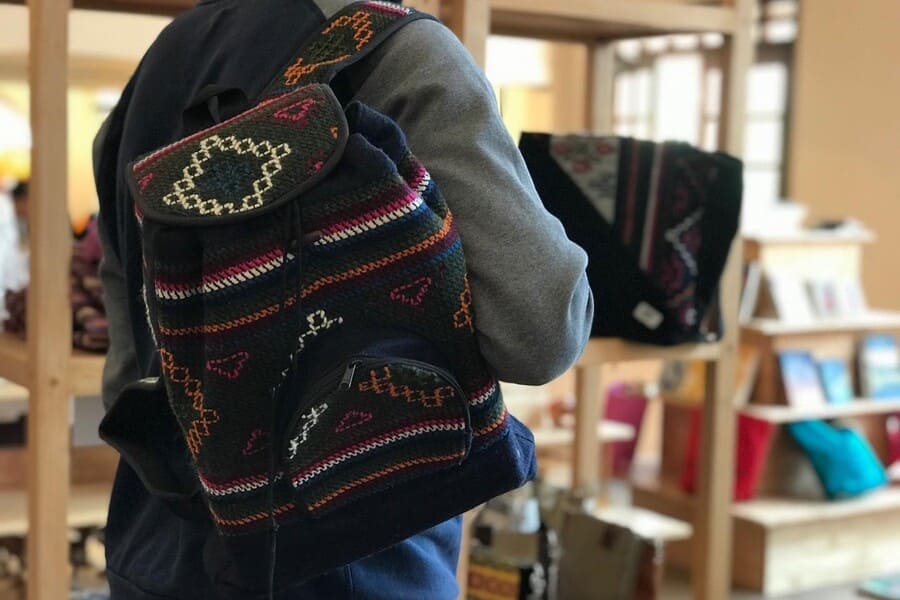
Nestled in the heart of the Eastern Himalayas, Bhutan is a kingdom where ancient traditions breathe alongside modern life. Among its most treasured cultural legacies is Yathra Bhutan, a vibrant handwoven woolen textile that has been crafted for centuries in the valleys and highlands of this mystical land. Travelers who book bhutan tours often return home not just with memories of dramatic monasteries and mountain vistas, but with a piece of Yathra Bhutan folded carefully in their luggage, a living artifact of Bhutanese heritage that no photograph can fully capture.
What Is Yathra Bhutan?
Yathra Bhutan refers to a traditional form of woolen textile produced exclusively in Bhutan, distinguished by its bold geometric patterns, rich natural colors, and exceptional warmth. The word "Yathra" is derived from the Dzongkha language, referring specifically to strips of hand-loomed wool fabric that are later stitched together to create scarves, blankets, jackets, and home furnishings.
Unlike mass-produced fabrics, each piece of Yathra Bhutan carries the fingerprint of the weaver who made it. No two pieces are exactly alike. The textile is deeply embedded in Bhutanese daily life and ceremonial culture, worn during festivals, gifted at auspicious occasions, and passed between generations as heirlooms.
For anyone exploring Bhutanese arts and crafts, Yathra stands as one of the most distinctive and collectible textile traditions in all of Asia.
The History of Yathra Weaving in Bhutan
The roots of Yathra weaving stretch back several hundred years, with historians tracing its origins to the Bumthang region in central Bhutan. Bumthang, often called the spiritual heartland of the country, sits at an altitude where sheep graze freely on rolling alpine meadows, providing the raw wool that makes this textile possible.
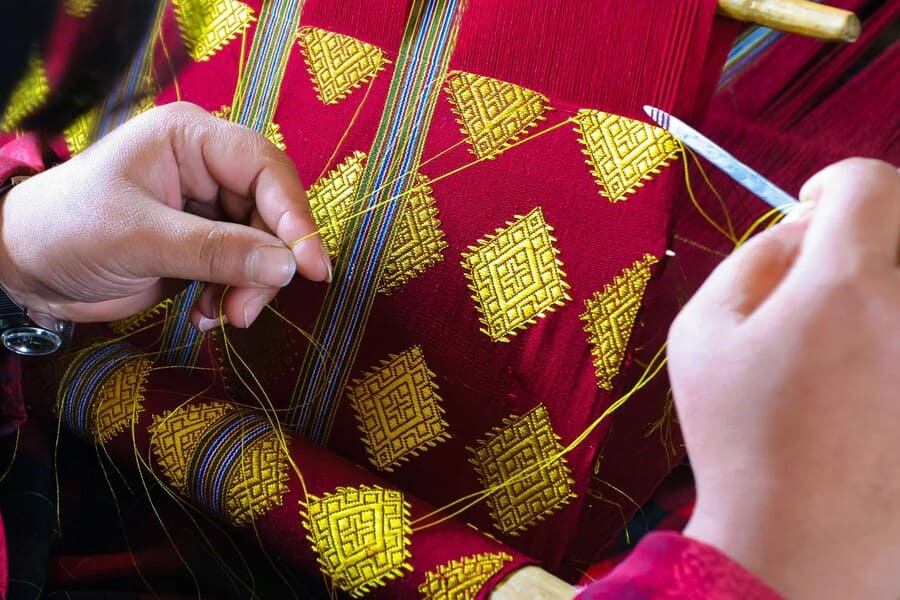
Historically, Yathra was woven primarily by women in rural households. The craft was passed from mother to daughter, with patterns and techniques memorized and transmitted orally across generations. In the absence of written instructions, the preservation of Yathra weaving depended entirely on community memory and familial dedication.
During the reign of various Bhutanese dratshangs (monastic institutions) and noble families, finely woven Yathra was considered a mark of social status. The finest pieces were offered to monasteries, worn by clergy during important rituals, or presented as diplomatic gifts. Even today, the craft carries deep reverence within Bhutanese society.
The Royal Government of Bhutan, recognizing the cultural and economic value of traditional crafts, has actively supported Yathra weaving through programs run by the Craft Promotion and Coordination Unit under the Ministry of Home Affairs. These initiatives have helped sustain weaving communities, particularly those in Bumthang, ensuring that the tradition continues to thrive in a changing world.
Why Is Yathra Bhutan So Special?
Handwoven from Natural Sheep Wool
What separates Yathra Bhutan from other textiles is the integrity of its materials. The primary fiber is yak or sheep wool, sourced locally from Bhutanese highlands. The wool is completely natural, free from synthetic blends, making the finished fabric exceptionally warm, breathable, and durable. In the cold mountain winters of Bumthang, a Yathra shawl or jacket is not a fashion accessory but a practical necessity.
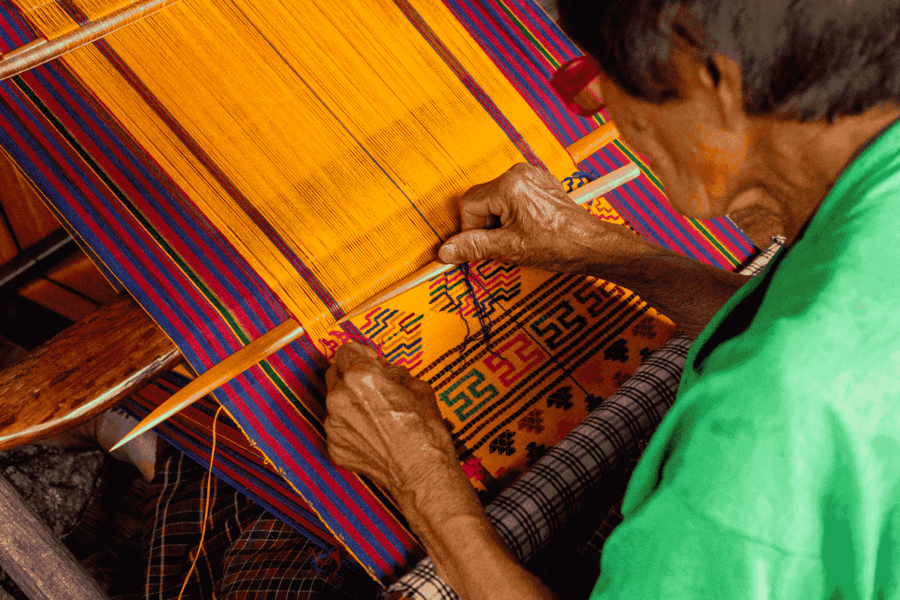
The use of natural wool also means that Yathra textile Bhutan ages beautifully. With proper care, a quality piece can last decades, growing softer with use while maintaining its structural integrity.
Distinctive Colors and Geometric Patterns
One of the most visually striking aspects of Yathra Bhutan is its color palette. Traditionally, weavers used plant-based and mineral dyes derived from local sources such as walnut shells, madder roots, indigo leaves, and bark from native trees. These natural dyes produce earthy reds, deep blues, warm oranges, and forest greens that are both vivid and harmonious.
The geometric patterns woven into Yathra textile Bhutan are not merely decorative. They carry meaning rooted in Buddhist symbolism and Bhutanese cosmology. Diamond shapes, zigzag lines, interlocking chevrons, and stylized floral motifs appear repeatedly, each with its own cultural significance. Experienced weavers can identify the regional origin and even the family lineage of a piece simply by reading its patterns.
A Reflection of Bhutanese Culture and Identity
In Bhutan, textiles are never just fabric. They are a language, a cultural record, and an expression of identity. Yathra Bhutan is no exception. Wearing or owning a piece of Yathra connects the individual to a living tradition that predates modern Bhutan as a nation-state.
At festivals like the Jambay Lhakhang Drup in Bumthang or the Thimphu Tsechu, locals dress in their finest traditional garments, many incorporating Yathra-woven elements. Tourists fortunate enough to witness these events gain a visceral sense of how deeply Yathra weaving is woven into the social and spiritual fabric of the country.
How Is Yathra Textile Bhutan Made?
Wool Preparation
The process begins long before a single thread meets a loom. Raw wool is collected from sheep, washed thoroughly to remove impurities, and then carded, a process of combing the fibers to align them into smooth, consistent strands. This step is time-intensive and requires skill to ensure the final yarn is strong and even. In many households in Yathra Bhutan Bumthang, families still perform wool preparation by hand using traditional wooden carding tools.
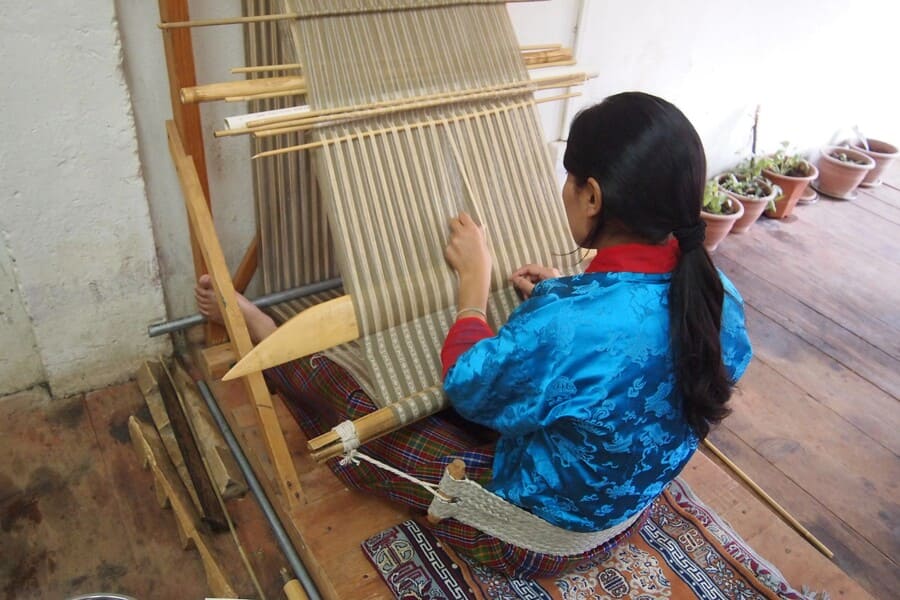
Once carded, the wool is spun into yarn using a drop spindle or a simple spinning wheel. Spinning is often done communally, with women gathering to work together while sharing stories and songs, preserving the social dimension of the craft.
Dyeing the Yarn
Dyeing is among the most skilled stages of Yathra weaving. Traditional dyers must understand the seasonal availability of plant materials, the chemistry of mordants used to fix color to fiber, and the specific soaking and heating times required for each hue. Mordants such as alum, iron-rich mud, and wood ash are commonly used to ensure colorfastness.
In recent decades, some weavers have incorporated chemical dyes to achieve a broader spectrum of colors or to reduce production time. However, connoisseurs of Yathra Bhutan and cultural purists consistently favor naturally dyed textiles for their depth of tone and environmental credentials. Organizations promoting sustainable crafts in Bhutan encourage weavers to maintain natural dyeing practices wherever possible.
Hand Weaving on Traditional Looms
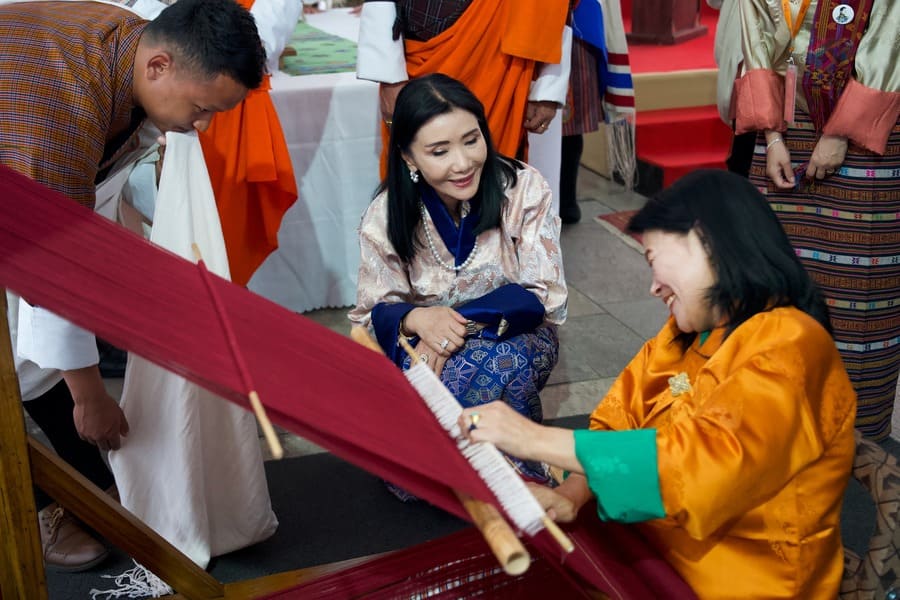
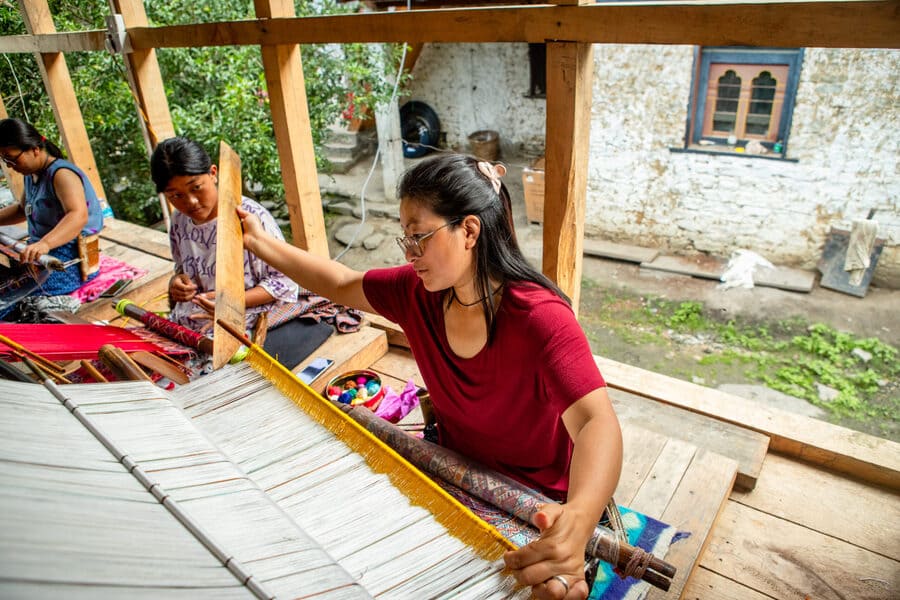
The actual weaving is performed on a back-strap loom or a frame loom, both of which have been used in Bhutan for centuries. The weaver sits on the ground or on a low platform, controlling the tension of the warp threads with body weight and rhythmic foot movements. Passing the weft thread through the warp and beating it down with a comb-like tool called a reed, the weaver builds the fabric row by row.
Yathra weaving requires intense concentration and pattern memory. The weaver must track the sequence of color changes and pattern intervals without written notation, relying entirely on experience and learned intuition. A skilled weaver can produce roughly two to three meters of Yathra textile Bhutan per day under ideal conditions.
Finishing the Textile
Once the weaving is complete, the fabric is cut from the loom and edges are finished to prevent unraveling. Strips of woven Yathra are then stitched together lengthwise to create wider textiles such as blankets or jackets. The stitching is done carefully to align the patterns across seams, a test of both craftsmanship and attention to detail.
The finished textile may be lightly steamed or washed to set the fibers and soften the hand feel before it reaches the market or the end customer.
Where to Buy Authentic Yathra Bhutan
Yathra Bhutan Bumthang Weaving Centers
The most authentic and highest-quality Yathra Bhutan Bumthang products are found at dedicated weaving centers in the Bumthang valley, particularly in and around Jakar town. Several family-run workshops open their doors to visitors, allowing travelers to watch weavers at work and purchase directly from the source. Buying at a weaving center ensures authenticity, supports artisan livelihoods directly, and often gives buyers the chance to commission custom pieces.
Notable weaving centers in Bumthang are associated with local families who have maintained the craft across multiple generations. Staff at your guesthouse or tour guide can recommend reputable workshops worth visiting.
Local Craft Markets
Beyond Bumthang, Yathra Bhutan can be found at craft markets in Thimphu and Paro, particularly around key festival seasons. The Weekend Market in Thimphu is a popular destination where local vendors sell textiles, including Yathra, alongside other Bhutanese crafts. Prices here can vary widely, and bargaining is not always appropriate, so it is worth researching market rates beforehand.
Government-Approved Handicraft Shops
For travelers who prefer a guarantee of quality and authenticity, the National Handicrafts Emporium in Thimphu, operated under government oversight, is a reliable source. Products sold here are vetted for quality and authenticity, making it a safe option for first-time buyers who may not yet have the eye to distinguish authentic Yathra textile Bhutan from imitation or lower-quality alternatives.
The Price Of Yathra Textile Bhutan
Pricing for Yathra Bhutan reflects the labor intensity of the craft. A simple Yathra scarf begins at approximately 800 to 1,500 Bhutanese Ngultrum (roughly USD 10 to 18), while a full Yathra jacket or blanket can range from 3,000 to 15,000 Ngultrum (approximately USD 36 to 180) depending on size, complexity of pattern, and the quality of wool and dyes used.
Naturally dyed pieces command premium prices over those using synthetic dyes. Similarly, textiles woven with fine-spun wool are priced higher than those using coarser yarn. Buyers should be wary of unusually low prices, as these may indicate machine-made imitations or synthetic blends passed off as authentic Yathra textile Bhutan.
When budgeting for a Bhutan trip, setting aside USD 50 to 150 for Yathra purchases is a reasonable starting point for travelers who wish to bring home meaningful, high-quality souvenirs.
Frequently Asked Questions About Yathra Bhutan
What is Yathra Bhutan made of?
Yathra Bhutan is made primarily from sheep wool, though yak wool is also used in some highland communities. The wool is spun into yarn, dyed using natural or synthetic dyes, and then woven on traditional looms. The result is a thick, warm, and durable textile uniquely suited to the cold climate of Bhutan's mountain regions.
Why is Yathra from Bumthang so famous?
Yathra Bhutan Bumthang has earned its reputation because the Bumthang valley has historically been the center of Yathra weaving in Bhutan. The region's highland sheep produce high-quality wool, and generations of skilled weavers have refined patterns and techniques that are recognized as the gold standard of Bhutanese woolen textiles. Bumthang Yathra is widely considered more intricate, better dyed, and more culturally authentic than Yathra produced elsewhere.
Is Yathra textile handmade?
Yes. Authentic Yathra textile Bhutan is entirely handmade, from the initial wool preparation and spinning to the dyeing and weaving processes. No mechanical looms are used in traditional production. This handmade quality is central to the value and appeal of Yathra, making each piece a unique, one-of-a-kind object.
How much does authentic Yathra Bhutan cost?
Authentic Yathra Bhutan ranges from around USD 10 for a simple scarf to over USD 180 for a full blanket or jacket with complex patterns and natural dyes. Prices vary based on wool quality, pattern complexity, size, and whether natural or synthetic dyes were used. Always purchase from reputable sources such as weaving centers in Bumthang or government-approved handicraft stores.
Can tourists watch Yathra weaving in Bhutan?
Absolutely. Many weaving centers, especially in Yathra Bhutan Bumthang, welcome visitors to observe the Yathra weaving process. Some workshops even offer short hands-on experiences where travelers can try their hand at the loom. This is one of the most meaningful cultural experiences available in Bhutan and provides invaluable context for understanding the skill and time that goes into each finished piece.
Yathra Bhutan is more than a souvenir. It is a textile that carries within its threads the history, identity, and artistic soul of one of the world's most culturally intact nations. For any traveler seeking a genuine connection with Bhutan beyond its landscapes and monasteries, exploring the world of Yathra weaving offers an intimate, unforgettable encounter with the living traditions of the Himalayan kingdom.